Thank you, from Alternate Takes

Well friends, 2011 is drawing near a close. This has been a really exciting year. I’ve been blessed to have reached some personal milestones, travel to different parts of the world, and experience the daily privilege of discovering the world through the eyes of the most beautiful person I know, my son Riley.

After many, many months of pondering and planning, I finally reached another goal, launching Alternate Takes this past spring. However, what has been even more amazing than getting my blog off of the ground, is the tremendous support and feedback I have received from my friends and readership. When I started Alternate Takes, in my heart I knew there was a place for it…a need for it, too. As I express quite often, no one group of people can dominate any subject without there being discrepancies, biases and even fabrication. Still, I didn’t know how well the messages I wanted to convey would be received. I’m not the first person to tackle these subjects within music and art, but matters of race, gender, and age are sometimes tough to navigate, even when your audience is the open-minded artistic type [wink, wink]. Somehow, going against the grain within these touchy matters can cause those who are not willing to hear you honestly, to label you as all the things you are not. Happily, I can say that not only has Alternate Takes been received with an overwhelming amount of support from those representing a spectrum of races, genders and ages, but as a result, many meaningful dialogues have been started, and in the process, I’ve met so many wonderful people who share a passion for this music, just like I do.

It is so important that I say this. As you know, in creating this blog, a huge stereotype I hoped to obliterate in the process was that Black women in my generation don’t love, know about, or support jazz. Since the time jazz music has been documented, Black women have been calculatingly omitted from the social aspect of its progression. The “common” Black woman is still forgotten, or worse yet, dismissed. This is an age old tradition which has successfully transferred a sort of unspoken public humiliation Black women face within the jazz scene which has written them off as simply disconnected and non-supportive. Hurtful as this is, the one thing I am most proud, is having had the opportunity to prove this to be a myth. With the launch of Alternate Takes, some of my greatest support has come from Black women. So many of you have diligently advocated for the relevancy and importance of an “Alternate Takes” type of platform. In a society which sends a relentless message that Black women, especially of this generation, are arch enemies, incapable of sisterhood, and culturally limited, you have gloriously exemplified otherwise; that we rally around each other and support one another’s positive efforts. Thank you for letting me know that you have my back, and for proving a bigger point, which is that Black Women Love Jazz!

To everyone who was gracious enough with their time to grant me an interview, thank you so much. The dynamic range of your talents and ideas are what has made this blog an interesting place for my readers to visit. I also thank you for your professional advice.

To everyone who has sent their tweets, shared a link on their Facebook pages, spread the word via word of mouth, and left their heartfelt, thought-provoking, and inspiring comments on all of these platforms, a huge thanks to you also. You really made the difference.

To my Nextbop family, thank you for inviting me on board as a contributor. It is humbling and invigorating to work with like-minded young people who love this music, dedicate and sacrifice their time, supporting modern jazz.

To every writer who has welcomed me into the journalistic jazz community — a HUGE thanks. Nate Chinen, thank you for speaking up about women writing about jazz, and for inviting me to participate in The Gig’s year-end roundup among such an esteemed panel of jazz writers and thinkers. John Murph, Ted Panken, Josh Jackson, Mike West, Howard Mandel, Matt Merewitz… thank you for the encouragement, advice, and kind words. NPR Jazz and Patrick Jarenwattananon, thank you for including Alternate Takes in your “Jazz Around the Internet” weekly roundups. Thanks to WordPress for being a great CMS and tool to facilitate the blog, and for thinking enough of my work to Freshly Press a couple features!

To all of the Alternate Takes readers, followers and subscribers, thank you for hearing me. From aficionados to the newly indoctrinated, you have received my voice with more than a fair ear. I’m so overwhelmed from all of the love, enthusiasm, and gratitude. I’m sending all of those sentiments right back to you.

2012 is going to be such an exciting year for music! I hope you will take the ride with me again as I bring you more interviews, editorial, and special series. When reading your emails and comments, there is one common thread that is most inspiring, and that is the expression of happiness that you have found a place which you believe is speaking to you, and the desire for me to “keep it going”. That is a promise I can keep! I will keep going.

In short (and long), thanks for embracing an alternate take. 😉

Coming up, look for features from artists who are releasing some of the most anticipated albums of 2012, and a special Black History series in February!

Have a blessed New Year!

All the best,

Angelika
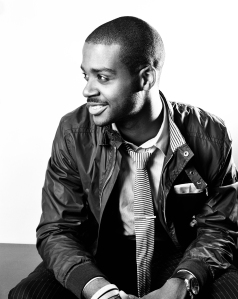
On the Rise: A Conversation With Kris Bowers

Photo by Gianina Ferreyra

At the start of the second set at Greenwich Village’s Jazz Gallery last week, pianist Kris Bowers played for a packed and eager house.  A packed, eager, young, and particularly diverse house, to be more exact, with a look, vibe and mood much closer to a college music festival than what the typical jazz audience tends to resemble.  For a brief moment, I thought I was having auditory hallucinations with the amount of hoots and hollers being emitted from young, female voices.  It is a rare occurrence within the jazz club setting.  In Bowers’ performance debut as a leader, that would not be the last series of eyebrow-raising observations.

Bowers’ band for the evening was an assemblage of up-and-coming fresh faces in jazz with saxophonists Kenneth Whalum III and Godwin Louis, trumpeter Mike Cottone, bassist Earl Travis, and drummer Joe Saylor. The band of twenty-somethings played with a fire and focus beyond their years, performing an impressive amount of original material.  Bowers, who is an orchestrator, founder of a music company, and appears on the most significant hip hop album of the 2011, closed the moving set with a song from Bon Iver, the cutting edge indie folk band, which has been riddled recently with Grammy nominations.  At twenty-two years old, it would be impossible to prognosticate a journey which is just beginning, but it is clear that Kris Bowers is setting a precedent of individuality, pushing the jazz envelope with a fierce, yet understated momentum.

If I’ve misled you to believe that his musical boundlessness and vast experience compromises his significance as a bonafide jazz musician, let me set that record straight nice and early.  He is a tremendous pianist, with a world of history underneath his fingers and a wise restraint balanced by a conspicuously original sound.  He’s a bad cat.  He convinced a panel of pianistic paramountcy (which included Herbie Hancock, Ellis Marsalis, Danilo Pérez, Jason Moran and Renee Rosnes) of just that, taking first place at the Thelonious Monk International Jazz Competition earlier this year, beating out some of the best undiscovered pianists in the world.  An experience Bowers described as nothing short of nerve-racking, “I was nervous, definitely.  Because you know, those were like all of my favorites [on the judging panel].  I hadn’t really met any of them…I knew Jason [Moran] but other than that I hadn’t met any of them, so to be playing all this stuff that I pretty much got from most of them [laughs] I was trying to…play the best that I could.”

Like most musicians on the New York City jazz scene, Bowers hails from outside of the five boroughs, specifically Los Angeles.  Initially studying classical music, Bowers made an organic transition to jazz, which he studied at both Colburn School for Performing Arts and Los Angeles County High School for the Arts (LACHSA).  After graduating in 2006, Bowers moved to New York, continuing his studies at the Juilliard School.  “The jazz scene in LA…I mean it’s kind of sad.  It’s pretty bleak,” says Bowers who is now a second-year master of music degree student in the Juilliard Jazz program.  “Mostly because of the geography of the city.  It’s so spread out, it’s kind of hard. Like, we don’t have an area like the Village where there’s a bunch of clubs you can go around to and to get together to play…it can take an hour to drive to somebody’s house, [for example].  And then unfortunately, a lot of the clubs are closing down, like The Jazz Bakery.  There’s just not many places to play out there.  I think most of the people want to come to New York once they feel like they’ve gotten to a certain level, or feel like they’re ready.”

Bowers’ New York state of mind has proven to be a wise one many times over.  If you’re going to be in the right place at the right time, New York is always a good place to start.  Twists of fate work their magic best in The Big Apple, as Bowers explains how a chance subbing gig landed him on the Kanye/Jay-Z magnum opus, Watch the Throne.  “Casey [Benjamin]  plays with Q-Tip and he was on tour with [Robert] Glasper, and he recommended me to do this gig at the Brooklyn Hip Hop Festival, and it just so happened that at that gig, there were special guests like Busta Rhymes, Black Thought, Monie Love, and Kanye, and at the time they were finishing up a couple tracks from Watch The Throne that Tip was working on, and they wanted me to play some string parts on one song, and to write some piano parts on this other song, so it kind of all happened in a matter of days.”

Writing string parts was likely no tough task, as you can add budding film scorer to Bowers’ resume.  “That’s something I definitely want to get into, honestly more than playing…especially eventually,” admits Bowers.  “I’d love to be able to dig into that.  I’ve always admired the role that music plays in a film and how it helps tell the story and how great music can enhance a film and bad music can ruin a film…just how much power the music has.  And also that it’s a literal translation of emotion; trying to compose and trying to write music that sounds scary, or sounds like this person is falling in love, or this person is angry…”

Photo by Gianina Ferreyra

With so many facets to Bowers’ career, and his vast musical inclinations, it’s exciting to think about what is in store in terms of his debut album, scheduled for an early 2013 release on Concord.  “I have a couple of ideas, a couple of special guests brewing who are pretty awesome,” says Bowers who is currently forming his band, something about which he is particular.  “The main thing I’m going for with the band is that I want to feature a band full of guys in our generation. Just because I feel like a lot of these guys with their first albums, it’s just [about] names and they have these veterans, and that’s understandable…but I feel like playing with the people I’m friends with and who I know are going to put as much energy [into the record] as possible.  They’re not just doing it for a paycheck.”

He elaborates further taking a cue from a master with whom he shared recent company.    “Like Herbie’s debut album Takin’ Off.  He had Dexter Gordon — he was a veteran — but everybody else on the record was around Herbie’s age. Even though now they’re jazz legends, at the time they were just like one of Herbie’s contemporaries, so I feel like what I want to do is play with people who are my contemporaries.”

There is certainly no shortage of worthy peers from which Bowers can choose.  The well of young talent in jazz today is startling; most notably on Bowers’ own instrument, particularly as it pertains to African Americans.  Not in the last fifteen years (at least) has there been such a surge of rising Black pianists, all making their mark in the same generation.  Bowers is in great company with the brilliant likes of Sullivan Fortner, Christian Sands, David Bryant, Joshua White and Johnathan Batiste, to name a few.  “It’s pretty great,” says Bowers of the strong representation.  “I remember even being in high school and kind of realizing that there were like three black kids in the jazz department…in an arts high school…in LA.  And when you think about the fact that this is our music…so yeah, it’s pretty great to see some young, Black piano players and all be kind of on the rise.”

And climbing fast.

===================

Getting To Know You…

AT: Who are your favorite pianists of now?

KB: Well, of people closer to my age, I would say Sullivan Fornter is one of my favorites, and also John Batiste.  Also, Lawrence Fields, Gerald Clayton, [Robert] Glasper, Aaron Parks…

AT: Do you have any favorite albums that came out this year?

KB: That new Thundercat album.  (Incidentally, that’s one of my favorites of this year also…but you’ll have to wait for the Alternate Takes Best of 2011 post for more details!)

AT: What are your favorite Hip Hop albums?

KB: The Low End Theory by A Tribe Called Quest.  That’s definitely one of my favorites.

AT: The last thing you listened to on your iPod?

KB: Bon Iver

AT: Name one person you would love work with?

KB: Quincy Jones

Kris Bowers performs Saturday, January 28th at the TriBeCa Performing Arts Center at 199 Chambers Street; (212) 220-1460, tribecapac.org.