Alternate Takes Week #6: Album for the Week

Herbert Laws' The Rite of Spring

A little late this week, sorry!

This is an album that I have owned for about five years, and I have always wanted to get to it, but never did until today.  This is a big part of why I love doing these weekly album explorations!  What a gorgeous album!  Hubert Laws’ The Rite of Spring is was certainly a worthwhile find.  This 1971 CTI release features Bob James on piano and harpsichord, Jack DeJohnette on drums, Ron Carter on bass and cello, Airto Moreira, and others.  The album is made up entirely of classical interpretations of pieces by Fauré, Stravinsky, Debussy and Bach.  I’m always intrigued by these kind of musical marriages.  Miles and Wynton were two of my earliest examples of orchestral and classical merges in jazz.  This album is strikingly different and I think it has something to do with the era.  We’re talking the 70s here, and I’m willing to bet these classical pieces have never met so much FUNK in their existence!  “Brandenburg Concerto No. 3, First Movement” is as sample-able as any James Brown track.  Well, it is DeJohnette on drums, so that’s not such a surprise!  But, outside of the stellar lineup, there are just really some lovely tunes on this album.  The album opens with a moving interpretation of  Fauré’s “Pavane” which is an album’s worth of a journey alone.  But there are other gems on this very short album (it’s barely over a half-hour) and hearing some of my favorite jazz musicians in this context is always eye-opening.  I appreciate them even more.

Coming in August: A Drummer Composers Series!

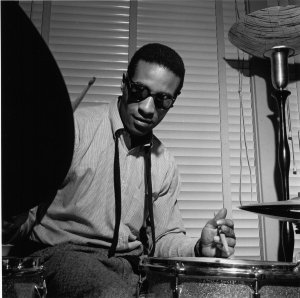
Photo by Francis Wolff

Every Tuesday in August!

The drum is one of the most integral parts of the jazz ensemble, and is a primary identifier of each era of jazz music.  Yet, the drums are not always fully appreciated or understood in the larger scope of the discussion.  Being a non-melodic instrument, the drums and the drummer are sometimes pushed into a corner of reliable and necessary contribution.  This is not to say that the collective of legendary drum heroes have not been justly celebrated, but drummers generally do not receive the same fanfare, or even public interest  as their melodic counterparts.   But the drum is as important as any other instrument in the jazz ensemble, and this is a great time to highlight that, especially in the context of composing.  Over the last several years, there has been a wave of jazz drummers who are coming to the forefront as bandleaders, recording their own albums, and most interestingly for me, composing their own music.  This year alone brings albums from drummers Jeff “Tain” Watts, Adam CruzJohnathan Blake, and Otis Brown III to name a few.  In addition, drummers like Kendrick Scott, Eric Harland, Brian Blade, Antonio Sanchez, E.J. Strickland and others have released wonderful work as band leaders and are all uniquely strong composers.  Alternate Takes is giving you a look inside, and giving a window into understanding their writing process, outlook, influences and signatures.  The series also attempts to edify the audience with discussion of drummers throughout earlier generations who have been influential writers.

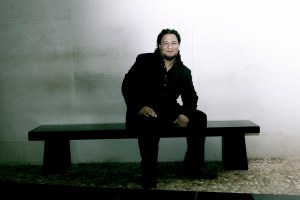
Starting August 2nd, and continuing each Tuesday in August, the Alternate Takes Composers Series kicks off with drummer E.J. Strickland.  Look for more interviews from Adam Cruz, Johnathan Blake, Kendrick Scott, and Eric Harland and explore the other side of the rhythm — the writer.

Alternate Takes Week #5: Album for the Week

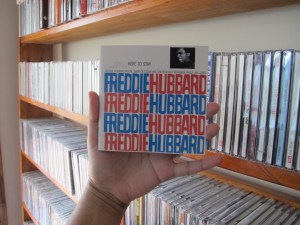
Freddie Hubbard’s Here to Stay

Ooooh yeah! This is a gem! This lesser known Freddie Hubbard album was recorded in 1962 but was not officially released until sometime in the 80s.  Featuring Hubbard, Wayne Shorter, Cedar Walton, Reggie Workman and Philly Joe Jones, Here to Stay is all vibe. Not in the sense of slow tempos or meditatively structured tunes, (the album opens with the blistering “Philly Mignon,” one of two compositions by Hubbard on this session), but in terms of the energy between the musicians, the compositions and sonic recording quality, this is mood music all day.  Almost all members of Art Blakey’s Jazz Messengers at the time of this recording, the synergy is undeniable and the execution is nothing less than stellar. Hubbard’s “Nostrand and Fulton” (BROOK-LYN!) and Cal Massey’s “Assunta” are among my favorites on this album.

I often see colors when I listen to music. For me, this album is definitely grey. The perfect early morning coffee or late night wind down or rainy afternoon album. Of course I can listen to Freddie Hubbard any damn time. Enjoy! Have a great weekend!

Benefit Concert for Saxophonist Dayna Stephens July 4th

On Monday, July 4th, The All-Star Bay Area Musician’s Community will come together at Yoshi’s San Fransisco in support of dynamic saxophonist and composer Dayna Stephens, who is battling a rare kidney disease, and is in need of a transplant.  The concert’s line-up is scheduled to include Marcus Shelby, Lavay Smith, John Santos, Ray Obiedo, Faye Carol, Kenny Washington, Mike Olmos and Wil Blades among others.

Stephens, who is loved and respected equally on and off of his instrument, was diagnosed with Focal Segmental Glomerulosclerosis (FSGS) which affects 20 out of every million people.  The awareness of FSGS was heightened when NBA superstars Sean Elliott and Alonzo Mourning were stricken with the disease within a few years of each other.  Both have recovered successfully.

Stephens is unanimously described by his peers as a uniquely brilliant saxophonist and an inspirational human being.  Stephens’ outlook and disposition are the apotheosis of being attuned with one’s humanity and artistic expression.  In his own words, “With all this in mind, the music must go on.”

And indeed it will.

Stephens recently completed a successful KickStarter campaign for his new album which will feature an awesome ensemble of musicians including fellow Bay Area natives, trumpeter Ambrose Akinmusire and drummer Justin Brown.  The album will also feature saxophonist Jaleel Shaw, pianist Taylor Eigsti, and bassist Joe Sanders.  Singer Gretchen Parlato will appear as a special guest on the album, and has a long-time musical and personal friendship with Stephens.  “He’s a beautiful human being…incredible musician.  So genuine and humble but such a monstrous talent.”

Brooklyn born and Bay area bred, Dayna Stephens began playing saxophone at 13 years old.  He attended Berkeley High School, and was consequently accepted to Berklee College of Music in Boston.  He has since played with an array of great musicians like Kenny Barron, Roy Hargrove, Tom Harrell, Quincy Jones, Stevie Wonder, Jeff Parker, Freddie Hubbard, Steve Coleman, Oliver Lake, and many more.  One of the Thelonious Monk Institute’s brightest rising stars, Stephens began to emerge as a very talented arranger and composer, while thriving on his instrument.  It was here that Parlato (another Monk Institute student) and Stephens developed their relationship.  Stephens also appears on Parlato’s latest release, The Lost and Found, offering the title track, which he previously recorded on his stellar debut album The Timeless Now, in 2007.  “It was an instrumental piece, already with that title, and he asked me to write lyrics,” explained Parlato.  “So I just unraveled his theme.. this theme in our lives of opposition, and learning to accept it… everything is always up/down, good/bad, high/low, moment to moment in the bigger picture of our existence.”

These sentiments about Stephens’ incredible perspective and positive attitude are echoed by Stephanie Dalton, who is director of Urban Music Presents; the organization producing the upcoming benefit.  “The day to day living while being on dialysis is truly remarkable; 11 hours at one time and two additional hours throughout the day.  Yet in spite all of this, he is recording a new album, regularly performing and teaching and mentoring.”

Dalton, who has plans to put on a similar event in New York City in the fall, expounds on Stephens’ humility.  “Dayna would never ask for help.  I just thought it was something I could try to do to raise awareness for him, as this will be a long sustained effort.”  The continued efforts are sorely needed, as the kidney transplant is only the first step to healing.  “He is on the list to receive a transplant, and once he gets the transplant, he is facing over $4,000 a month in prescriptions for the anti rejection meds,” says Dalton.

The state of health care in America along with the challenges of the security of health insurance for musicians is a seemingly unmitigated issue, and the center of the frustration for many.  Musical colleague and friend Dwayne Burno recently overcame a bout with kidney disease, and has been a source of support to Stephens in recent months.

If the jazz community can reflect Stephens’ perpetual light, this benefit should be outstanding.  Nothing less is deserved for a musician who inspires so many above and beyond jazz.  “I always say he’s an angel on earth,” says Parlato.  “When you are around him you feel like he has a bigger purpose…like something really deep is going on.” ♦

To help, please send donations to:
Jazz Foundation of America
Memo to read: In care of Dayna Stephens to:
Jazz Foundation of America
322 West 48th Street
6th Floor
New York, NY 10036
Also, visit HELPDAYNASTEPHENS.org for more information on how you get tested to see if you are a match.  Get involved!

Please Note: Dayna cannot accept contributions directly
.

Please watch this video to find out exactly how you can help and get involved.

Sentiments from the jazz community…

“In addition to being one of the most creative and exciting young musicians
on the music scene, Dayna Stephens is also a wonderful human being.  Dayna
is a graduate of the Thelonious Monk Institute of Jazz Performance and he
has made everyone at the Institute extremely proud with his many
accomplishments and with his commitment to moving the music forward.”

Chairman of the Board of Trustees
The Thelonious Monk
Institute of Jazz
“Dayna Stephens for me is the voice that New York is missing.  His sound on the saxophone is so warm and so rich and so unique. I’ve really gotten to know him over these past few years. He recently became my neighbor and we have had the great fortune of sharing the stage together in Kenny Barron’s band. He is one of the most gentle souls you will ever meet. I’m honored to call my brother and friend.  Love You, D.”
– Johnathan Blake
Dayna is truly one of the most gifted musicians of our time and is as humble as they come.  I’m luck to say I played my first gig with him, and to call him my teacher and mentor.  He is a true innovator of his craft.
– Justin Brown

“Dayna has a genuinely great ,warm spirit that shines through him and his music…”
– Robert Glasper
“Dayna is a wonderful musician, an  incredible player and… one of the nicest guys that I know.  Just playing with Dayna is very inspiring – he makes me reach. I love that.”

” ‘Dude’… that’s one of the words he used often (smile).   Dayna’s heart is pure as a kid’s heart.  He’s always ready to help in any situation. When it comes to music, he has one of the best saxophone sounds I’ve ever heard.”
– Lionel Loueke

“I remember first meeting Dayna.  We attended the Aspen Snowmass camp together, and every night there were jam sessions where he’d actually play acoustic bass ALLL night!  The fact is, he sounded great on bass as well as tenor.  I admired his passion for music, and I still do to this day.  Working with him on Gretchen’s album was a highlight for me.  It had been a few years since I heard Dayna, and to hear the growth, depth, and artist that he has become inspired me.  I feel privileged to have worked with someone with an undeniable strong voice on his instrument, and I look forward to hearing more from him!”
– Derrick Hodge

“Dayna is one of those special-few brilliant musician folk who plays and lives from the heart.  Being around him and hearing the expression of his art makes the world of music (and friends) a better place.”
-Becca Stevens

“I saw Dayna as a gorgeous musical and personal presence in The Monk Institute years ago when he was in LA.  Dayna’s improvisational synergy with Gretchen Parlato on  Juju, from Gretchen’s latest CD shows what a master he is. A deep feel and profound listening and love comes from Dayna’s playing. For me, he represents the very best of what music is all about.”

Dayna Stephens has been a constant inspiration for me since we met at Berklee.  His humanity shine through his music and he’s always been a person of humility and extraordinary talent. I wish Dayna the best.”
-Kendrick Scott

“Dayna is my favorite tenor player to play with. I fully respect and admire his musicianship. Dayna brings a certain spirit to the music, one that I can only describe as ‘like a big hug’. His sound is so warm. His ideas are so creative. Everything he plays feels like an invitation. He has that rare special quality where he can make everyone in the band sound better.  As a person, Dayna shows genuine love and compassion for all those around him. His genuine selflessness transcends the music and effects all the people he encounters. This is what makes him a true artist and a beautiful person.”
– Gerald Clayton


Remembering Michael

“There have been others, but never two lovers like music…music…and me.”

Michael Jackson

It has always been slightly unsettling for me to celebrate or commemorate an artist around the anniversary of his or her death.  After all, it is what a particular artist accomplished or inspired during their lifetime that is being remembered, and only logical that we therefore reflect upon them during their coming into the world, and not their departure from it.  But when it comes to Michael Jackson, it’s a different story — at least for me, and I believe, for many.  I think this is because Michael’s actual death was so profound.  The gaping hole left in the hearts of millions symbolized that losing Michael Jackson was the single most culturally impacting event of our lifetime.  I’m sure you know exactly where you were and what you felt when you learned that Michael was gone.

I was either so young, or not yet born when we tragically lost musical giants like John Lennon, Otis Redding, Sam Cooke and Lee Morgan.  Furthermore, my mom was pregnant with my older brother when both Dr. Martin Luther King Jr. and Robert Kennedy were assassinated, and had already mourned the previous deaths of JFK and Malcolm X.  America has undoubtedly suffered terrible loss of artistic, cultural and political icons within the scope of our lifetimes.  But, the interesting thing about Michael’s death, which is so distinctive, is that because his career spanned over 40 years, our parents and even grand-parents loved him just the same as those of my generation, and for all intents and purposes, actually “knew” him first, as much as the Thriller generation loves to claim him as being “really” ours.  (I’m guilty).

Michael’s impact is so far beyond music, and the various contexts through which he can be intensely studied and analyzed are indicative of that.  One thing that deeply affected me upon his death was that for all who thought that Michael Jackson forgot that he was Black…well, the media had not.  But thankfully, neither did Black folks.  Michael was celebrated and memorialized most appropriately by his people; without the damper of controversy and distractions, which were exacerbated by the media.  The beautifully relentless home-going celebration at the Apollo Theater in Harlem was the most brilliant example to the world that Michael not only understood his roots, but he was the embodiment of Black culture.

That being said, Michael’s indelible influence on the world is unprecedented and I cannot even grasp the totality of what that really means.  It surpasses any sort of quantification.  In a sense, like Michael himself, his influence is not to be understood but simply appreciated and respected.  There’s nothing else to do with such an other-worldly gift we are so blessed to have experienced.  Here, some of the most prominent artists in modern jazz have taken a moment to reflect on what Michael Jackson means to them.  Besides, Michael’s musical influence reaches every corner of every genre of music; a lesser discussed topic as it relates to jazz, but perhaps one of the most important angles to look at.  Enjoy.

—————————————–

“To me, Michael Jackson is important as an artist because not only did he understand the role of the artist in society — he went far beyond it.”
Ambrose Akinmusire

“One thing that’s great about Michael, which isn’t often discussed or recognized, is that Off The Wall and Thriller are, for lack of a better word, Jazz records. The chordal structures, melodic content, string and horn arrangements, the Blues, the drive and swing of the rhythm section are all hallmarks of the so-called Jazz idiom. They represent, so far, the pinnacle of success for Black Popular Music and it is of no coincidence that those two records coincided with the return of the music otherwise referred to as straight-ahead Jazz. These records did more than just turn people on to Michael Jackson or R&B, they made people fans of music at a time when the industry was in a slump, much like so-called Jazz did around the turn of the century. ‘Thriller’ and ‘Off The Wall’ are essentially a continuum of the work first established on the ‘Hot Fives’ and ‘Hot Sevens’ by the world’s first Rock star, Louis Armstrong.”
– Nicholas Payton

“Michael Jackson proved that music and dance are probably the most powerful uniting forces in this world.  His style continues to cross genres, religious beliefs, class systems, and political and racial divides more than any other artist to date.  Everyone in every corner of the world knows his name and image.  And all of this came from this simple fact of how unique and great his music and dancing really was.  It was produced, executed, and recorded to the highest level, and it will keep on influencing peoples’ lives beyond our years.”
– Mike Moreno

“MJ is an icon. Unbelievably talented and devoted his life to his passion for art and humanity.  So hugely influential and groundbreaking, and seemed like such a beautifully gentle, caring soul.  Growing up on his music, I think we all felt a personal connection.  He makes us want to sing along, get up and dance, lay down and cry, stand up and shout, reflect upon and then actively do something.  That’s what art should do.  I will forever shake my head in amazement at his singing, his dancing; he was the greatest entertainer who ever lived and quite possibly ever will.  No one can touch that.”
– Gretchen Parlato

“The feeling I always got from MJ’s music is that he never hid or second guessed his inner voice and passion.  You undeniably feel every word and every dance move.  So overwhelmingly inspiring.”
Casey Benjamin

“I believe Michael Jackson was here to show us how small the world really is, and his vehicle was his talent as an entertainer.  No matter where one is from, when one is born, what language one speaks, what doctrine one reveres, etc… most of the world that existed during or exists post his life has been moved deeply by Michael’s talent.  This is evidence of something much larger than fame.  It is evidence of what is possible.  Genius, in my opinion, is not measured by mere talent.  It is measured by what those talents have contributed to the world.  His impact on us was so huge because he constantly had a vector, a purpose for the talents he was given.”
Marcus Strickland

“Nobody has been MEGA famous for as long as he has.  Also, with the ability to change and be a pioneer in each change.  He is a master vocalist-performer-dancer and just has a musical sound of his own.  Not to mention he has inspired everyone, and is hands down, the most famous person to walk the Earth.”
Robert Glasper

“Michael Jackson was clearly an artist of the highest order. Perhaps the quality that he possessed which stood out to me most was his ability to convey a particular message with utmost sincerity, sophistication, character and execution. His influence is seemingly infinite and his legacy will live on forever. I am truly grateful that I was born during his lifetime.
– Marcus Gilmore

“MJ was an extension in the evolution of Black entertainment.,  He pulled from James Brown, Sammy Davis Jr. and Jackie Wilson, making him the greatest in his time.”
– Jesse McB
ride

“Michael was a beacon for excellence as an artist.  He was always looking for the next level of perfection.”
– Kendrick Scott

“MJ is the epitome of timeless.  His influence on my generation is profound.  From his music to the ‘Beat It’ jacket.  You wanted to sing, dance, and be like Mike.  And that impact is just as strong on my 5-year old.”
– Keyon Harrold

“Michael Jackson was a great inspiration to me for many different reasons, but there are three that stand out.  One, he checked out and absorbed everything. If you listen to songs or look at videos of MJ when he was young, he knew James Brown, Ray Charles, and all the legends that came before him.  He knew many genres of music and appreciated them.  I even saw a video of him tap dancing to Mingus on You Tube.  The beautiful thing is that you can hear all of these influences in all the music he did.  Two, he was a true activist/humanitarian. He wasn’t afraid to speak out about the bad things that were going on in the world.  He wasn’t passive and he put his thoughts in his music. He wasn’t trying to be politically correct and didn’t care what others thought.  Three, he was all about moving forward.  If you look at MJ throughout his career, he always surrounded himself with those that were current and had something fresh to say. He reminds me of Miles Davis in that way.”
Jaleel Shaw

I loved the cartoons in the Thriller record sleeve.. The one of MJ and paul mccartney pulling the girl was particularly memorable.. Seeing that image, it was hard to hear the song and not laugh! That record and the album art were definitely a highlight of the Vasandani family record collection.
– Sachal Vasandani

“MJ for me was and still is the total package of an entertainer.  He had everything: the voice, moves and the charisma.  He was always striving to better himself as an artist.  He never took his talents for granted.  He always knew where he was going and what steps to take to get him there.”
– Johnathan Blake

Thank you, Michael.

Week #4 Alternate Takes: Album for the Week

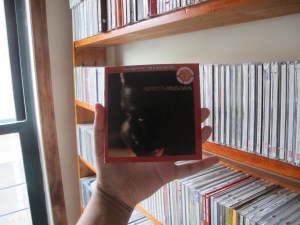
Miles Davis’ Nefertiti

This is probably my favorite album from Miles Davis’ second classic quintet of pianist Herbie Hancock, saxophonist Wayne Shorter, bassist Ron Carter and drummer Tony Williams. Nefertiti is the fourth album from this group, and for me, the best. Before this album, the group had already recorded three ground-breaking and ridiculously killing albums: E.S.P., Miles Smiles, and Sorcerer. These albums produced some of my favorite songs like “Footprints”, “Iris”, “Pee Wee”, “Sorcerer”, and “Little One”.  But for me, Nefertiti is just IT! Tune selection, vibe and execution are all unparalleled here. Some of the tunes on this album exhibit some of my favorite solos and playing from these five musicians. Ron Carter on “Pinocchio” is some of the nastiest bass playing I’ve ever heard, for example. Herbie on “Fall” is completely entrancing. A collection of tunes written by everyone in the band (except Miles) the album has something for everybody. It swings like nothing else ever heard when it wants to, it is simply mesmerizing and moody with loop-like tunes like “Nefertiti” and “Fall”.  t’s just a splendid album that I never skip through, never gets old, and is always inspiring. A timeless, brilliant classic.

Week #3 Alternate Takes: Album for the Week

Roy Hargrove's "Family"

Aaaah, the 90s.  This was one of my favorite eras, because this was around the time that I was now old enough to buy my own records, and check out music with friends my own age.  I was a sophomore in high school (LAG, stand up!) when this album came out.  I remember going to see Roy for the first time when I was about 16 years old at the Jazz Gallery, where he was performing the music of John Coltrane. I remember thinking that he played so much “older” than his years.  If there is one jazz musician who has been here before, it’s Roy Hargrove.  His feel (especially on a ballad) for me, is unsurpassed.

On Family (Verve), the first three tunes feature Hargrove’s incredible quintet of Ron Blake, Stephen Scott, Rodney Whitaker, and Greg Hutchinson, as they play songs that are an homage to Hargrove’s own family.  On “Roy Allan” (tribute to Hargrove’s dad), Hutchinson’s feel is so infectious, you can’t help but bob (must be the Brooklyn in him).  The album also features two other awesome rhythm sections and a hell of a list of special guests including Christian McBride, Wynton Marsalis, Karriem Riggins, Lewis Nash, and David “Fathead” Newman, to name just some.  A beautiful mixture of standards and originals, young lions and masters, Hargrove has always been such an important figure in jazz not only because of the way he set the jazz scene ablaze as part of one of the most important eras in jazz, but because of this balance he always seems to be able to strike; super modern, yet steeped in tradition.  Definitely one of my favorite RH albums, and the perfect day to play it!

Have a great weekend!

“Roy Allan” with Roy’s Big Band…

Fate of Coltrane Home Is Uncertain Again…

Me and Mrs. Fulgoni at Town Hall meeting in 2004

I am so sorry to learn that the final home of John Coltrane is once again an endangered historical landmark, according to an article in today’s New York TimesThe Coltrane Home’s official website states that “A nationally significant historic site, The Coltrane Home in Dix Hills, is in danger. Listed as one of the 11 Most Endangered Historic Places by the National Trust for Historic Places, and saved from demolition following a worldwide grass roots effort several years ago, it remains in urgent need.”

thecoltranehome.org

The news has stirred up all of the emotions that I felt when I first learned of this issue back in 2004.  I remember getting a call from Steve Fulgoni, historian for the Half Hollow Historical Association in the Dix Hills area, where Coltrane’s last home is located.  He is an avid John Coltrane lover and supporter, and probably one of the nicest people I’ve ever met (his wife is quite a wonderful person as well).  Anyway, he informed me that he was heading up an effort to have a hearing of sorts at Huntington Town Hall to make the case for the home to escape demolition and rightfully be deemed a historical landmark.  He asked if I would mind attending and reading the letter I had previously written about my feelings about Coltrane and the importance of the home.  I could not have been more honored by the invitation, and I went.  It was an experience I’ll never forget.  It was the first time I met Ravi Coltrane, and Matt Garrison (son to legendary bassist and Classic Coltrane Quartet member, Jimmy Garrison).  Fairly new in my career in jazz and advocacy, this was such an impressionable moment for me; the first time I felt that rewarding feeling that comes from understanding I somehow had a personal hand in something so important.  But according to today’s Times article, “lack of funds” have stalled the efforts and put the home in danger, yet again.

John Coltrane is the single most influential artist in my life, and I look at it as no less than my duty to get back to business and do whatever I can.  Won’t you also?

To help, please visit www.thecoltranehome.org or contact sfulgoni@thecoltranehome.org.

Here is the letter I read at Huntington Town Hall in 2004.

Week #2 Alternate Takes: Album for the Week

Dianne Reeves' When You Know

Eyes closed, I reached out to my music library and picked out this little gem.  Dianne Reeves singing love songs in a tasteful array of genres.

Dianne Reeves has always been that singer that if you knew her personally, you would probably solicit her to sing all of your favorite songs.  She just has that kind of voice that makes you want to hear her interpret anything…and she actually can.  Produced by George Duke, When You Know (Blue Note) is Valentine’s Day on disc.  With arrangements from Duke and Billy Childs, it’s hard to go wrong.  The album is well composed, with R&B classics like The Temptations’ “Just My Imagination” and Minnie Ripperton’s “Loving You,” Jobim’s “Once I Loved” and American Songbook classics from Alan and Marilyn Bergman, for example.  Reeves is no stranger to singing repertoire out of the jazz box (think her 90s album, Quiet After the Storm, for example) but her robust yet sweet voice singing love songs, is especially inviting.

She is neither trying to reinvent the wheel nor is she doing a carbon-copy dealie (a pet peeve of mine. Why re-make a song exactly the way it’s already been done?).  Her re-interpretations are worthwhile.

Caution: may result in some romance ❤

Nicholas Payton on Jazz, Politics and the Courage to be Himself

“If I can’t be myself, what’s the point in saying anything?”
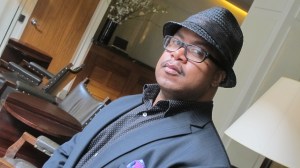
Photo by: Angelika Beener

This is a mantra that trumpeter Nicholas Payton lives by. Outspoken, at times shocking, at times brutally honest, at times perfectly poetic, Payton is as verbally diverse as he is musically.

At just 37 years old, Payton has the depth and breadth of experience and perspective of someone twice his age. A musical prodigy and professional musician for over twenty years, the New Orleans native is the culture, and an authoritative figure in Black music. The GRAMMY® winning musician, with nine albums to boast, is also accomplished on several instruments including piano, bass, and drums; an adeptness he was able to demonstrate on his latest album Bitches, an autobiographical musical memoir of love and heartbreak.

One of jazz music’s most vigorous provocateurs, Payton has unabashedly confronted every elephant in the room when it comes to jazz, particularly as it pertains to race, culture and politics. Payton does not shy away, instead forcing critics, fans, and fellow musicians alike to deal with the uncomfortable yet imperative subjects. If ever there was a figure in jazz today, who voices what others only ponder, it is Nicholas Payton, who has carried on the tradition of some of the most outspoken jazz musicians I can think of: Miles Davis and Wynton Marsalis. (Must be a trumpeter thing. The trumpet, after all, has always symbolized an awakening, a truth, a call to action.)

“A lot of folks have gotten really upset with me about a lot of stuff I’ve said, and that’s OK,” says Payton. “To me, you wouldn’t be getting upset really, if what I was saying didn’t have any merit, you know, and it’s affirmation to me that I need to continue to speak. I do feel like I have a gift of sorts to provoke thought, and to get people to think and to have a voice out here for what I feel is not really represented in the way that I feel that it should be. To not do that, to me is…I would feel like I’m not being responsible. I would feel a burden of guilt, perhaps, for not doing something about something I feel like I am called to do, so to speak.”

There is arguably no genre of music that reaches more points of contention when it comes to definition than jazz.  Critics, documenters and so-called historians have long used their position and power to inject their theories of what is and isn’t jazz – many times with detrimental consequence to black inventors. Moreover, black jazz musicians have experienced their share of disproportionate exposure, appreciation, and financial support.  Internally, the subject has been strained between musicians, and as the spectrum of jazz musicians broadens, so do the theories of what constitutes as credible. Payton deals with this issue head on, striking a chord with some, and a nerve with others resulting in a divide that is more often than not, a racial one. “To me you’re not furthering the so-called jazz tradition if you don’t address the fundamentals of what that thing is. To me, it has to have to have a blues sensibility… it has to have a groove sensibility. If you obscure both of those and highlight the European elements of it, then to me it ceases to be what’s known as jazz. I mean, it’s fine for what it is, but don’t call it jazz.”

In our ridiculously labeled “post-racial” era, it seems as if when someone brings up the issue of race as a matter of speaking their truth, in turn, they will automatically be looked at as some form of a racist. Currently, it is conveniently almost in poor taste to even bring up race, treated as a cop out to some, others branding one as being angry for acknowledging it. Payton refutes all of these suggestions, and challenges people to deal with what’s on the table. In a generation where an African-American tradition can be almost devoid of African-American participants in various mediums on any given day (read your average jazz blog, magazine or festival or club line-up), we have come face to face with a cultural crisis.  Post young lion era, jazz has become less of itself and more of something else: grunge, rock, country, ambient…
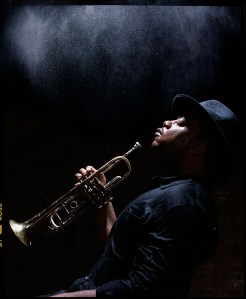
Photo by: Adam Weiss

“I do have a problem in general with just this whole notion that so-called jazz can be whatever you want it to be. Just this whole, like, ‘Oh, you can mix this with Indian music and not have to deal with [the tradition], you can mix it with Eastern European music…’ It’s like, why? Why is that necessary? Those [styles of] music have those traditions.  Most ethnic music… most music [styles] period, have an improvisatory aspect of it. So why is it necessary to take Black music and just kinda make it what you want, and that’s OK?  That’s really what my whole beef is. People have died to play this music. This music is our path to freedom. And now that we are able to enjoy some of the fruits of all the work that our ancestors did, you’re not just gonna take this and make it what you want to make it. Respect our tradition.”

When it comes to the passing on the tradition to Black youth, Payton is not so sure that the mark is being met, and with good reason. In fact, I can attest to this myself. When working on a radio broadcast a few years back, which featured the top five or so college jazz bands in the tri-state area, including Julliard, The New School, and SUNY Purchase, there was not one black musician among them – in ANY band. A blaring signal to me that the institutionalization of jazz may not be in the interest of serving black youth.

“When has an institution ever been a good thing?,” Payton blatantly stated to me. “In anything Black, already the connotation to me is not good.  When does that ever mean anything positive?  Prison is an institution. Institutions are funded by people who have money who want to see a certain thing. Which doesn’t necessarily serve the so-called  “people”, and doesn’t necessarily serve the so-called ‘community.’ It serves some kind of interest. It’s become an institution and that’s so not what the spirit of the music is supposed to be. A big reason why you’re not seeing Black kids matriculate into college level programs is because there aren’t high school level programs… jazz bands after school, etc. If you look at… programs… I don’t want to call them out, but a lot of institutions that have high school outreach. Which ones do they go to? They don’t really go to the ones in the ‘hood. Where are those musicians coming from? The Black church used to be a big source. Music in general is just dying in the black community. There used to be a piano is every house, didn’t matter if you was poor or not. People sang in the choir, they had some kind of musical outlet.”

Being from New Orleans, Payton is as close to the social foundation of jazz music as anyone can get, and he consistently draws clear correlation between the culture and the music, which he believes need to co-exist, unquestionably. “Jazz music has a social function, and I think the music has gotten away from that, and the more it’s sort of gotten in other arenas like the concert hall, and the performing arts centers, and the schools, it became something else. It’s life and you have to feel it, and that intuitive part of it, which is the most important part, it’s all but overlooked. You go to colleges, and you know, all these young cats, and they can read fly shit and they can play all these changes and intricate things, and then you call a medium tempo blues, and they can’t hold it together. That’s a part of the problem.”

Photo by: Ingrid Hertfelder

Photo by Ingrid Hertfelder

Payton’s protective stance has been a hot button for many. His one or two sentence observations and proclamations about jazz on Facebook can easily garner upwards of two hundred spirited response comments – a testament to his belief that while all is calm on the surface, just below is a sea of controversy. And everyone wants in. But while he may have a reputation for being a thorn in your side, depending on where you stand on the issues, he is also a staunch supporter of today’s up and coming jazz musicians, often a humbly silent hero behind significant good deeds in the jazz community. For Payton, it’s just simply the right thing to do.

“I’m not just paying lip service. I’m not just trying to be controversial or drum up controversy. I mean these things. And to me, if you gonna talk the talk, then you gotta walk the walk. I want to support that because you know, I can’t say all of this shit about well ‘such and such doesn’t do for the music’ and not contribute myself. And I feel a lot of musicians are selfish, like if someone don’t give them a CD or if they gotta pay to get in a club, they won’t go, and I don’t do that. If I show up, unless the guy [at the door] recognizes me off the bat, I’ll pay the whatever. Because this is how I make my money. How you gonna expect to get all the time and you don’t want to ever give? I feel like I’ve been blessed and given a lot, and for me just to be able to support cats who I feel have a voice, and who have done some interesting things. I’m not a rich man, I’m not Coca-Cola [laughs] but I’ll give my last dollar to someone I feel is trying to do something, because quality has to be supported. And if I don’t do it then who’s gonna do it? I don’t look to wait for somebody else to do things if I feel I have the power to do it. I really feel like we’re fighting a losing battle here and there’s just not enough people who are willing to do shit for one another in this world, and I just don’t wanna be that kind of person, and I don’t care if I don’t see anyone else doing it, then I’ll die trying to do the things I believe. Otherwise what worth is my life if I’m not consistent in not only what I say, but what I do… how I live? On every level, I wanna be the same person, and exude all the things that I believe. Otherwise my life is for naught.”

Inspired in part by the way jazz musicians are still treated and regarded in our society, Payton believes things need to change on a lot of levels. “That’s why I’ve come to have disdain for the word jazz. Because it automatically just means that you’re gonna be disrespected. It’s OK to treat you any kinda way. It’s OK that there are only two people in the club, it’s OK for them to tell you, ‘There’s a whole menu, but ya’ll can only eat this off the menu.’ It’s OK to not have a dressing room, or a dressing room with no ventilation. At a certain point you have to learn to say no.”

Payton has said “no” to much of what’s going on in the world of jazz today, but never without profound insight.  Whether you agree or doggedly reject where he’s coming from, you will walk away different. He will leave an impression on your brain, and a desire in your heart to at least think about what he’s saying.  his is the most intriguing aspect of Nicholas Payton off of his horn. At the end of the most heated debate, the one sentiment that everyone can agree on is that they respect Nicholas Payton for being who he is.

“But on a broader level there’s room for it all to exist. I’m not gonna hate on anybody’s right to express themselves the way they want to, but I’m certainly gonna say what I have to say about it and because I feel like what I represent is not really talked about, I find myself having to be vocal because no one is really saying it. And I’ve kinda had to accept somewhat being the fall guy for what is actually right. So I’m like, well, cool, if that’s what it has to be… fine. But I know what I can’t do. I can’t just be the kind of person to sit there and let it happen, because to me then I’m part of the problem…that’s not me.”