“If I can’t be myself, what’s the point in saying anything?”
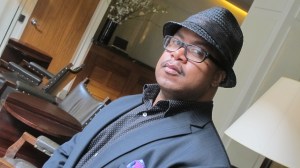
Photo by: Angelika Beener
This is a mantra that trumpeter Nicholas Payton lives by. Outspoken, at times shocking, at times brutally honest, at times perfectly poetic, Payton is as verbally diverse as he is musically.
At just 37 years old, Payton has the depth and breadth of experience and perspective of someone twice his age. A musical prodigy and professional musician for over twenty years, the New Orleans native is the culture, and an authoritative figure in Black music. The GRAMMY® winning musician, with nine albums to boast, is also accomplished on several instruments including piano, bass, and drums; an adeptness he was able to demonstrate on his latest album Bitches, an autobiographical musical memoir of love and heartbreak.
One of jazz music’s most vigorous provocateurs, Payton has unabashedly confronted every elephant in the room when it comes to jazz, particularly as it pertains to race, culture and politics. Payton does not shy away, instead forcing critics, fans, and fellow musicians alike to deal with the uncomfortable yet imperative subjects. If ever there was a figure in jazz today, who voices what others only ponder, it is Nicholas Payton, who has carried on the tradition of some of the most outspoken jazz musicians I can think of: Miles Davis and Wynton Marsalis. (Must be a trumpeter thing. The trumpet, after all, has always symbolized an awakening, a truth, a call to action.)
“A lot of folks have gotten really upset with me about a lot of stuff I’ve said, and that’s OK,” says Payton. “To me, you wouldn’t be getting upset really, if what I was saying didn’t have any merit, you know, and it’s affirmation to me that I need to continue to speak. I do feel like I have a gift of sorts to provoke thought, and to get people to think and to have a voice out here for what I feel is not really represented in the way that I feel that it should be. To not do that, to me is…I would feel like I’m not being responsible. I would feel a burden of guilt, perhaps, for not doing something about something I feel like I am called to do, so to speak.”
There is arguably no genre of music that reaches more points of contention when it comes to definition than jazz. Critics, documenters and so-called historians have long used their position and power to inject their theories of what is and isn’t jazz – many times with detrimental consequence to black inventors. Moreover, black jazz musicians have experienced their share of disproportionate exposure, appreciation, and financial support. Internally, the subject has been strained between musicians, and as the spectrum of jazz musicians broadens, so do the theories of what constitutes as credible. Payton deals with this issue head on, striking a chord with some, and a nerve with others resulting in a divide that is more often than not, a racial one. “To me you’re not furthering the so-called jazz tradition if you don’t address the fundamentals of what that thing is. To me, it has to have to have a blues sensibility… it has to have a groove sensibility. If you obscure both of those and highlight the European elements of it, then to me it ceases to be what’s known as jazz. I mean, it’s fine for what it is, but don’t call it jazz.”
In our ridiculously labeled “post-racial” era, it seems as if when someone brings up the issue of race as a matter of speaking their truth, in turn, they will automatically be looked at as some form of a racist. Currently, it is conveniently almost in poor taste to even bring up race, treated as a cop out to some, others branding one as being angry for acknowledging it. Payton refutes all of these suggestions, and challenges people to deal with what’s on the table. In a generation where an African-American tradition can be almost devoid of African-American participants in various mediums on any given day (read your average jazz blog, magazine or festival or club line-up), we have come face to face with a cultural crisis. Post young lion era, jazz has become less of itself and more of something else: grunge, rock, country, ambient…
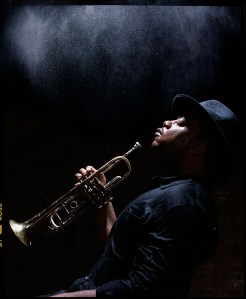
Photo by: Adam Weiss
- “I do have a problem in general with just this whole notion that so-called jazz can be whatever you want it to be. Just this whole, like, ‘Oh, you can mix this with Indian music and not have to deal with [the tradition], you can mix it with Eastern European music…’ It’s like, why? Why is that necessary? Those [styles of] music have those traditions. Most ethnic music… most music [styles] period, have an improvisatory aspect of it. So why is it necessary to take Black music and just kinda make it what you want, and that’s OK? That’s really what my whole beef is. People have died to play this music. This music is our path to freedom. And now that we are able to enjoy some of the fruits of all the work that our ancestors did, you’re not just gonna take this and make it what you want to make it. Respect our tradition.”
When it comes to the passing on the tradition to Black youth, Payton is not so sure that the mark is being met, and with good reason. In fact, I can attest to this myself. When working on a radio broadcast a few years back, which featured the top five or so college jazz bands in the tri-state area, including Julliard, The New School, and SUNY Purchase, there was not one black musician among them – in ANY band. A blaring signal to me that the institutionalization of jazz may not be in the interest of serving black youth.
“When has an institution ever been a good thing?,” Payton blatantly stated to me. “In anything Black, already the connotation to me is not good. When does that ever mean anything positive? Prison is an institution. Institutions are funded by people who have money who want to see a certain thing. Which doesn’t necessarily serve the so-called “people”, and doesn’t necessarily serve the so-called ‘community.’ It serves some kind of interest. It’s become an institution and that’s so not what the spirit of the music is supposed to be. A big reason why you’re not seeing Black kids matriculate into college level programs is because there aren’t high school level programs… jazz bands after school, etc. If you look at… programs… I don’t want to call them out, but a lot of institutions that have high school outreach. Which ones do they go to? They don’t really go to the ones in the ‘hood. Where are those musicians coming from? The Black church used to be a big source. Music in general is just dying in the black community. There used to be a piano is every house, didn’t matter if you was poor or not. People sang in the choir, they had some kind of musical outlet.”
Being from New Orleans, Payton is as close to the social foundation of jazz music as anyone can get, and he consistently draws clear correlation between the culture and the music, which he believes need to co-exist, unquestionably. “Jazz music has a social function, and I think the music has gotten away from that, and the more it’s sort of gotten in other arenas like the concert hall, and the performing arts centers, and the schools, it became something else. It’s life and you have to feel it, and that intuitive part of it, which is the most important part, it’s all but overlooked. You go to colleges, and you know, all these young cats, and they can read fly shit and they can play all these changes and intricate things, and then you call a medium tempo blues, and they can’t hold it together. That’s a part of the problem.”

Photo by Ingrid Hertfelder
Payton’s protective stance has been a hot button for many. His one or two sentence observations and proclamations about jazz on Facebook can easily garner upwards of two hundred spirited response comments – a testament to his belief that while all is calm on the surface, just below is a sea of controversy. And everyone wants in. But while he may have a reputation for being a thorn in your side, depending on where you stand on the issues, he is also a staunch supporter of today’s up and coming jazz musicians, often a humbly silent hero behind significant good deeds in the jazz community. For Payton, it’s just simply the right thing to do.
“I’m not just paying lip service. I’m not just trying to be controversial or drum up controversy. I mean these things. And to me, if you gonna talk the talk, then you gotta walk the walk. I want to support that because you know, I can’t say all of this shit about well ‘such and such doesn’t do for the music’ and not contribute myself. And I feel a lot of musicians are selfish, like if someone don’t give them a CD or if they gotta pay to get in a club, they won’t go, and I don’t do that. If I show up, unless the guy [at the door] recognizes me off the bat, I’ll pay the whatever. Because this is how I make my money. How you gonna expect to get all the time and you don’t want to ever give? I feel like I’ve been blessed and given a lot, and for me just to be able to support cats who I feel have a voice, and who have done some interesting things. I’m not a rich man, I’m not Coca-Cola [laughs] but I’ll give my last dollar to someone I feel is trying to do something, because quality has to be supported. And if I don’t do it then who’s gonna do it? I don’t look to wait for somebody else to do things if I feel I have the power to do it. I really feel like we’re fighting a losing battle here and there’s just not enough people who are willing to do shit for one another in this world, and I just don’t wanna be that kind of person, and I don’t care if I don’t see anyone else doing it, then I’ll die trying to do the things I believe. Otherwise what worth is my life if I’m not consistent in not only what I say, but what I do… how I live? On every level, I wanna be the same person, and exude all the things that I believe. Otherwise my life is for naught.”
Inspired in part by the way jazz musicians are still treated and regarded in our society, Payton believes things need to change on a lot of levels. “That’s why I’ve come to have disdain for the word jazz. Because it automatically just means that you’re gonna be disrespected. It’s OK to treat you any kinda way. It’s OK that there are only two people in the club, it’s OK for them to tell you, ‘There’s a whole menu, but ya’ll can only eat this off the menu.’ It’s OK to not have a dressing room, or a dressing room with no ventilation. At a certain point you have to learn to say no.”
Payton has said “no” to much of what’s going on in the world of jazz today, but never without profound insight. Whether you agree or doggedly reject where he’s coming from, you will walk away different. He will leave an impression on your brain, and a desire in your heart to at least think about what he’s saying. his is the most intriguing aspect of Nicholas Payton off of his horn. At the end of the most heated debate, the one sentiment that everyone can agree on is that they respect Nicholas Payton for being who he is.
“But on a broader level there’s room for it all to exist. I’m not gonna hate on anybody’s right to express themselves the way they want to, but I’m certainly gonna say what I have to say about it and because I feel like what I represent is not really talked about, I find myself having to be vocal because no one is really saying it. And I’ve kinda had to accept somewhat being the fall guy for what is actually right. So I’m like, well, cool, if that’s what it has to be… fine. But I know what I can’t do. I can’t just be the kind of person to sit there and let it happen, because to me then I’m part of the problem…that’s not me.”






 ALTERNATE TAKES