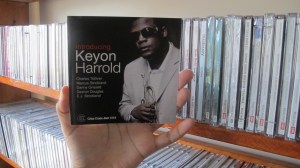
Trumpeter Keyon Harrold is the epitome of what it really means to be a modern jazz musician. He is also arguably the most important and incredible trumpeter of this generation. On his ironically titled Criss Cross debut, Introducing Keyon Harrold, he clearly needs no introduction. The St. Louis phenom has one of the most commanding sounds you’ll ever hear, and it’s likely that if you listen to any other medium of Black music, you’ve already heard it.
Harrold is a producer, arranger, and writer who has collaborated with hip-hop’s giants: Jay-Z, Snoop Dogg, and 50 Cent to name a few. He is also an integral part of R&B superstar Maxwell’s renowned live band, for whom he has also been an arranger for. He can be seen in Jay-Z’s “Roc Boys” video, as well as on any number of stages, including, and currently Cirque du Soleil’s The Immortal Tour, an epic tribute to King of Pop, Michael Jackson. But be not mistaken; Harrold’s versatility and affinity for a profusion of musical styles in no way denotes his indisputable paramountcy in the realm of jazz. His debut album could not be more validating.
For Introducing… Harrold calls upon his contemporaries; saxophonist Marcus Strickland, pianist Danny Grissett, guitarist Jeremy Most, bassist Dezron Douglas, and drummers E.J. Strickland and Emanuel Harrold. The album also features Harrold’s teacher, mentor, and employer of many years, Charles Tolliver.
The album is an outstanding collective of mainly original tunes, as well as a gorgeous take on the Horace Silver classic “Peace”. Harrold’s compositions are brilliant and authentic, and also infuse touches of his gospel roots and hip-hop predilections. Harrold’s performance throughout is exceptional. Not only is he one of the most masterful living technicians on his instrument, his evocation of passion and beauty in his playing is unparalleled. There are few musicians who can bring me to tears from playing one line…Harrold is that cat. He doesn’t even have to be soloing, or playing a lead melody for that matter. There is an anointing on his playing that is rare and supremely ancestral. And while he has certainly learned and assimilated the language of the masters before him like Clifford Brown, Freddie Hubbard, and Woody Shaw, Harrold has distinctively reinvented the foundation, creating a vernacular that is unique, fresh and inspiring.
Along with the stellar performances from all involved, Harrold’s mixture of beauty, grit, fluidity, and rawness bring this album to life. His amazing sense of melody is demonstrated on original tunes like “Sudden Inspiration” and “The Awakening”, where Harrold’s entrance on his solo is such a pretty mixture of said melody and rhythmic perfection, with drummer Strickland propelling the whole band.
I can’t say enough about this musician or album. But I will say this: If you don’t own it, or you haven’t heard Harrold in this context, do yourself a favor and modify your library, and your soul.
Triumph of the Heavy CD release party THIS THURSDAY, 9/29 at NYC’s Le Poisson Rouge. Details here.
Photo by Angelika Beener
Musician, composer, producer, label executive and visionary, Marcus Strickland is a powerhouse, on and off of his instrument. And on his seventh album as a leader, he’s more confident than ever.
Triumph of the Heavy Vol. 1 & 2 is saxophonist Marcus Strickland’s fourth release from his Strick Muzik record label. The double album features two of Strickland’s ensembles: his long standing trio of drummer and twin brother, E.J. Strickland and bassist Ben Williams; and his quartet which features the afore mentioned musicians, along with the fairly recent addition of rising star pianist David Bryant. Scheduled for release this August, Triumph is Strickland’s second double-album; a necessity of format if you’re trying to keep up with the musical multifariousness that has become his signature.
Strickland – who has led trio, quartet, and quintet bands, produces hip-hop beats, and has an affinity for singer/songwriters – attributes his versatility to the partnership between his creativity and the boundlessness he has established on the business side. “I’m always doing many things at the same time… making beats at the same time I’m writing jazz music. And also I have my own record label, which kind of allows me to record whenever I want to. So I don’t really have to go about it in a systematic way, as most artists have to do when they’re on a label. I can be as spontaneous as I want to, with that freedom in place.”
Having created a brand for himself partly out of necessity, in a climate where major labels are shrinking, that freedom has produced four vastly different projects from Strickland, with four different bands and highly developed concepts. He’s covered huge territory from Jacques Brel to Outkast, acoustic to electric, with spoken word artists and hip-hop production in between. A prolific writer, he is undoubtedly going to have tremendous impact on future generations from a compositional standpoint. On TriumphVol. 1, Strickland brings it back to his roots of the classic quartet with what Strickland calls, “a fresh approach to the piano’s role in the group,” and a whole new set of originals. “David [Bryant] is like the first person since Robert Glasper that I played with and felt like, ‘Wow this cat knows the art of comping.’ It’s such a lost art these days. Comping is so important. So on top of the fact that he’s an extremely incredible musician, he’s got the sensitivity that I’m looking for.”
Photo by: Dave Kaufman
Strickland is also reaching beyond musical versatility, introducing yet another set of skills, playing alto saxophone on almost half of Vol. 1. “I’ve always yearned to play alto again,” Strickland confesses. “I started on alto when I was eleven years old, and by the time I got into high school and it was time to get a professional instrument, tenor was my main love because everybody I listened to was on tenor, so that’s when I switched to tenor. But I always wanted an alto. I have really been concerned lately with just the instrument itself. The whole story behind the saxophone is just incredible. The inventor of it, the many things going on sonically when the saxophone produces sound…it’s just incredible. The pure execution on the instrument, that’s what I got more into. So, I really started shedding on that; classical etudes, my own etudes, really getting into the sound, the harmonics, overtones and stuff like that. But you know, recently I got a saxophone endorsement, and one of the first things I asked them was to give me an alto. And soon as I got it, I just started shedding it.”
Vol. 2 captures Strickland’s trio live at Firehouse 12, a studio in New Haven, CT. “It may be that the only thing more powerful than a strong triangle of musicians is one that has performed for an extended period of time,” says Strickland of his seasoned trio. “I was like man, I’m about to go back to quartet, but I wanted to capture the trio after touring so long. It’s just a strong triangle. That’s a strong sound there… just the bass, drums and the saxophone. It’s just a very significant sound. So I really wanted to capture that, but in a different light. On Idiosyncrasies (the all-trio album released on the Strick Muzik label in 2009), we did a lot of covers and on this one I did mostly originals that I wrote as we started touring and everything. I started coming up with different vehicles so I wanted to get those down. And to get it down in front of a live audience, that was great.”
Jelly & Stricks
Few of today’s jazz musicians have had clearer visions for themselves as artists than Strickland. At 31 years old, Strickland’s career has already spanned a decade, providing him plenty of perspective. “I’ve recorded three records outside of Strick Muzik so that makes a total of seven so I think this is a point where who you are as an artist really gets tested,” he says. “Because you now have a body of work. It’s not just one hit album that you’re trying to make. It’s like, ‘OK I’ve had several records that have been very successful, what am I going to do next?’ When you get to a point where you have a body of work in your past, it can either take away ideas from you, like, ‘Oh I’ve already done that, I don’t know what to do next.’ Or, it can give you more confidence than you’ve ever had before because I know that this is gonna be great. I know that I’m capable of putting out some great music that’s very relevant and very important. And that’s exactly how I felt when going into the studio.”
For Strickland, his substantial recording catalog is the result of his professed growing process which includes the need to document each phase of his course. “I have to make it into a product in order to really get past it, and I really want to get past it because I’m always yearning for the next step, the next plateau.”
Named “Rising Star, Tenor Saxophone” in Downbeat‘s 2010 Critic’s Poll, “Rising Star, Soprano Saxophone” in DownBeat’s 2008 Critics’ Poll and “Best New Artist” in the JazzTimes’ 2006 Readers’ Poll, Strickland has long commanded the attention of both fans and critics. He released his first album, At Last (Fresh Sound) in 2001, and placed third in the Thelonious Monk Institute of Jazz saxophone competition the following year. He has been an integral part of bands of legends like Roy Haynes and Jeff “Tain” Watts, and has a long resume of features, recording with Robert Glasper, Charles Tolliver, and countless others including Dave Douglas, another long-time employer. With the release of album number seven, the “next plateau” may bring about endeavors characteristic of the symbolic number. Strickland’s experience and savvy from a business perspective makes him a sagacious ally for the future of jazz recording artists. “I think I want to step back a little bit after [this release] and look into trying to do some things for other people that, you know, many major record labels are not really interested in. I really wanna take my time and think that through and get a very good plan for it.”
Inspired by his girlfriend’s epiphany about the substantive quality of jazz versus some of the dictates of popular radio, Triumph of the Heavy is appropriately titled – a testament to Strickland’s musical caliber, robust tone, and his rightful place as a titan of our time. Whichever way you spin it, Marcus Strickland comes out on top. “I’m always taking chances, but I’m no longer afraid to do it,” asserts Strickland. “I know I’m gonna be good on the other side.” ♦
It’s funny that I would pick this album after my Coltrane blog post. During the heaviest point of my Coltrane obsession, it was admittedly difficult for me to honestly hear many other tenor players. Don’t get me wrong, I loved a great spectrum of the music, but it took me taking a serious Trane hiatus during my late teens/early twenties to open up long enough to hear Joe Henderson, Wayne Shorter, and Hank Mobley — cats who join Coltrane in my Top 5 favs today.
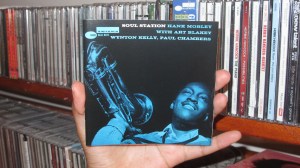
Soul Station is one of the most authentically grooving, swinging, bluesy, and well, soulful albums of its era. You can certainly credit the ensemble which accompanies Mobley. Wynton Kelly on piano, Paul Chambers on bass, and Art Blakey on drums. You can almost hear the funkiness just hearing those names together, can’t you? The repertoire to showcase these elements of their talents could not be more stellar. Mobley’s originals sound more like classic standards repertoire…mainly because of the memorable melodies and catchiness of the tunes. There isn’t a ballad on this record. For all intents and purposes, this is one of jazz music’s best examples of a dance record. In striking contrast to jazz that had become stigmatized as needing to be “observed” versus having a more participatory element, this album is meant to be moved to, there’s no doubt about it, even on Mobley’s takes on classics like “Remember” and “If I Should Lose You”. It’s hard to stay in your seat listening to this record.
Abundance of soul, does not mean lack of sophistication, as sometimes mistakenly philosophized, and Mobley exemplifies this perfectly. A perfect mixture of brawn and elegance, groove and fluidity, this aspect of Mobley is what makes him one of my favorites. An unsung hero of his time, for sure.
There isn’t a person outside of my immediate family that has had more of an indelible influence on my life than John William Coltrane. Sounds weird, right? But it’s true. I never knew him personally…but I’ve known him spiritually since I’ve been alive. You see, my first memorable musical encounter (at about 18 months old) was hearing John Coltrane. In fact, my earliest memory at all is hearing John Coltrane. I remember the feeling I had when I first heard his music. My mother would play two Trane records the most: Ballads and Duke Ellington & John Coltrane. In fact, I am named “Angelika” after the tune of the same name (different spelling) on the latter mentioned record. I thought that she was doing something magical when those albums came on. As soon as the needle hit the record, and the sound would travel through our Bronx apartment, I was transported to another world. Sometimes the music would move me to tears. My family would come over, and they’d think I was sitting off to myself crying because I couldn’t have something I wanted, or because it was time to go to bed and I was objecting, when what it really was, was taking in how beautiful Trane played “It’s Easy to Remember”. I was a pretty different kind of toddler, to say the least, and I still marvel at how 2 minutes and 45 seconds can bring that much beauty into the world. But it didn’t end there…the music of John Coltrane would follow me throughout my life, and see me through every good and bad thing.
I guess some would call it an obsession. Maybe. But if I had to name it (which I’d rather not do) I would be more inclined to label it as a connection. I think in some way, we are all connected to something bigger than us…and that is not to say that John Coltrane, the man, was larger than life. I read that a man once compared him to God, and it really upset and disturbed Coltrane. He did not think of himself as above any man. But his art…that is what is larger than life. And that is what I fell in love with, and remain in love with.
When I was seventeen, I bought two albums: Ballads, and Stevie Wonder’s Music of My Mind. I had grown up hearing both of these, but now I was a senior in high school, and I could buy my own music. This was a big deal to me! Somehow, hearing Ballads on my own…it was a rediscovery of sorts. I felt more alone…more of myself…maybe I was just getting older. A huge Stevie Wonder fan, I remember laying out on my living room floor, listening to “Send One Your Love” from The Secret Life of Plants album, and flipping out when I heard the Coltrane influence in the song, known sometimes as “Trane Changes”. At around 19 years old, I was into Giant Steps BIG TIME, and I was obsessed with the changes, the legends upon legends of stories about how he came up with them, how long he worked at developing them, and all of the inflated but majestic stories about the recording, in between. At about 20 years old, I had this incredible full-circle moment.
I was working as a P.A. at the Essence awards, and Stevie Wonder was one of the artists slated to perform. I was determined to see his rehearsal, and did! So he’s warming up, right? All of a sudden, he segues into “Giant Steps”! I lost my head! Here was my favorite musician, playing the music of my favorite, FAVORITE musician…without an audience…stripped of any fanfare, or glamor. And I was there to witness it. Incredible.
From my late teens, and throughout my early-to-mid twenties, I listened to Coltrane religiously. New Prestige box set coming out? It’s mine. New book coming out? I’m all over it (until I get pissed at the author for saying some dumb shit. Thanks, Lewis Porter, for getting it right, though). I would listen to My Favorite Things on the train on the way to and from school ev-er-y day. I loved to listen to Mr. Day on the train also…the energy and pulse of that song used to make me feel invincible. I listened to and absorbed this music like my life depended on it…and I suppose in a way it did. It was my spiritual food. But then in 2004, I had a tremendous opportunity to give thanks for all that I had received.
Me, psyched! (2004)
I don’t remember exactly how I found out, but somehow I learned that Coltrane’s last home in the Dix Hills section of Long Island, NY, was in danger of facing demolition. There was a contact name and number to call and an email address for the public, if they wanted to get involved and help. I was working at a recording studio in Manhattan, and I remember sending that email at the first chance. This was the home that Coltrane and his family lived in from 1964, where he conceptualized A Love Supreme. This was a looming travesty that needed immediate attention. I corresponded via email, and then by phone with a gentleman named Steve Fulgoni, who was heading up the grass roots efforts to contact the town officials and make the case for the home to be deemed a historical landmark. Letters and support poured in, and I was overwhelmed to be getting involved. This was a big deal. I wrote my humble little letter, and thought that my contribution would end there. But when I was asked to read the letter in front of the Huntington Historical Preservation Commission… WHAT??? Well, you know I did. There was a wonderful showing of support, including that from Ravi Coltrane, and Matt Garrison (bassist Jimmy Garrison’s son). I got to meet Mr. Fulgoni, and his lovely wife, and most importantly witness when the board voted for the home to be saved and deemed a historical landmark.
You see, it’s kind of funny sometimes. I think the beauty of art is that it is not to be simply received, it’s to be shared. And that sharing can come by way of a lot of opportunities. I’m so grateful that even in some small way, I helped make a difference in the honor of someone who made all of the difference for me.
I think ultimately the biggest impact that Coltrane has had on me is how to be a dedicated person. When you listen to Trane, whether it is one song, or an entire anthology, you hear his unfailing dedication. And that is something that has come to me more and more as I get older. Coltrane’s life was very short, unfortunately, and because of that, it’s really easy to see how unbelievable he was. I think about what he was accomplishing at the age I am right now…he was only a few years from his death at my age. Yet, he was changing the world. If that’s not inspiration…
It’s beyond the ridiculously killingness (yep, that’s a word) of his talent and gifts. I think his sense of commitment is ultimately what makes Coltrane so incredible. On this day, John Coltrane’s 85th birthday, I’m really thankful. And still awe-inspired, like the little toddler sitting off in the corner.
——————————–
This post is dedicated to the memory of Troy Davis.
For decades, Philadelphia has boasted one of the most burgeoning jazz scenes in the world. A thriving commorancy to legends like John Coltrane, Dizzy Gillespie, the Heath brothers, and Philly Joe Jones, to name a few, the City of Brotherly Love has been the backdrop to one of the most essential eras in jazz. Philly remains a cornucopia of jazz heritage, producing the likes of Christian McBride, Kurt Rosenwinkel, Derrick Hodge, Rodney Green, Orrin Evans, Ari Hoenig, and Jaleel Shaw. Drummer Johnathan Blake is at home among this esteemed group, becoming one of finest talents on his instrument, and now making his mark as a leader.
Blake will release The Eleventh Hour (licensed by Sunnyside Records) at the top of 2012. An extraordinary debut, Blake exhibits both his breadth of chops and his uncanny compositional skills. The all-star ensemble includes saxophonists Mark Turner and Jaleel Shaw, pianists Robert Glasper and Kevin Hays, trumpeter Tom Harrell, bassist Ben Street, and Gregoire Maret on harmonica. The Eleventh Hour is a fine album that is splendidly unfeigned and musically abundant. This dynamic cast of players, who are all leaders in their own rights, synergize to produces one of the best straight-ahead jazz albums I’ve heard in a very, very long time. Blake credits the long-standing brotherhood of his band members. “What’s great is that most of the guys that are in the band are on the record, so we had been playing together for years,” he explains. “Rob and I have been playing together since maybe the late 90s, so he’s played mostly all that music. Ben Street, Jaleel, Mark Turner…my homeboys. The only newcomer was Kevin Hays. We had played together a couple times, so for him most of the music was new and it was nice to have him be a part of this project because he brought a different sound to some of the older music, so it kind of helped us gain a different approach to our playing, so that was good.”
The Eleventh Hour is not only a well-cast, brilliantly executed album, but the repertoire is striking and distinctive. Blake penned most of the albums tunes, with the exception of a few. The band covers Randy Newman’s “Dexter’s Tune” from the tear-jerker movie classic Awakenings. Written for Dexter Gordon, who appeared in the movie and passed away before its release, Blake’s band captures the feel and memory of the saxophone great, with Mark Turner’s gorgeous take on the thoughtful melody. Blake also recorded Glasper’s “Canvas”, a moody, mantra-like beauty in 5/4 that features a vibrant exchange between Maret and Glasper, with Blake’s tasteful grooves elevating the experience and Mark Turner blazing the vamp. The album also features a blithely swinging number entitled “Blues News”, written by Blake’s long-time employer, Tom Harrell.
Blake’s compositions are equally outstanding, full of versatile virtuosity. Blake began writing music very early, egged on by his youth ensemble director. “The instructor of the program pretty much required us to all write music, and we all had to bring in a tune. When we first started out, [we were] playing standards repertoire and some Horace Silver, some John Coltrane, but then I would say when I was around twelve or thirteen, he said, ‘I want you guys to come in with a tune,’ and so that’s how I first got into it.”
Born into a musical family, Blake began his musical journey modeling after his father, John Blake Jr., a renowned jazz violinist. Young Johnathan began playing the violin as well at age three, before moving on to piano, and then landing most assuredly on the drums. The ASCAP Young Composers winner would benefit from his formidable years as a multi-instrumentalist. “For me, I think starting out with violin and piano kind of helped me be more aware of melodies. I was talking to a couple different drummers who were also like that. Like, Brian Blade is one that comes to mind. Oddly enough, he started on the violin also and he said that kind of helped when he’s hearing melodies. He also takes the guitar on the road when he travels, so I think there’s something to that…when you have that luxury of being able to play a melodic instrument. I mean, the great thing about playing piano is that you have the percussive side but also the melodic sides, so it’s like a full orchestra. It’s pretty amazing.”
Blake acquired the tools early on, but a push from his Dad undoubtedly developed his confidence as a composer. Blake recalls, “I remember like the first one or two compositions, my dad would help me with the notation. Then he was like, ‘You got it…you have to figure it out.’ And that was great.” Blake also credits the willingness of his employers to wholly share the stage, and welcome new music. “I think the other thing that happens too is that a lot of leaders, like in Kendrick [Scott’s] case playing with Terence Blanchard, Terence is open enough where he allows the other members of his band to start composing, so that’s another way that allows side men to start getting their composer chops up and eventually getting them on records. I think that’s kind of helpful too, and gives that extra little push to hopefully continue this [trend]. I’ve had the luxury of working with Kenny [Barron]. I’ve had the opportunity to bring in some tunes, so it’s really great to have a leader who’s open like that, where you don’t have to necessarily play all his or her tunes.”
Blake’s compositional aptitude and superior drum skills made for a natural progression to record as a leader. “I think a lot of it has to do with [the fact that] our role is a more supportive role, like you know, backing the band, and pushing the band or whatever,” says Blake of the recent emergence of drummers who have become front men. “So you’re never thought of as leading a band or writing your own music. With this music, we always have to try to reinvent ourselves so to speak, and really try to push the envelope, and always try to grow. So I think out of that came this idea of having drummers thought of as not just sidemen or as background support, but more as like, ‘Let’s see what this guy’s doing.’”
With the decision to record out of the way, the challenges of independently financing a record in the current industry climate loomed. Blake welcomed the task, setting up a successful campaign to help raise the funds. Blake used IndieGoGo to get his audience’s attention and implore his fans’ support. This new way of using funding platforms like IndieGoGo and KickStarter have proved successful for other jazz musicians like drummer Otis Brown III, and guitarist Mike Moreno. “I think the empowering thing is really just connecting with some of the fans,” says Blake about his campaign. “We travel all around and you don’t even think about certain people that you meet and exchange emails with and become Facebook friends with, and you go on KickStarter, and it’s like man, this person from Spain who I met ten years ago just gave me money. So, for me, I really like that kind of exchange and connection with some of the people that I’ve met along the road, on the journey, so that’s great.” Like that early push from his father, Blake would now have to push himself on the business side. “Some of the challenges were…I’m not the best salesman so it’s really hard to get in that mode. You have to push yourself and get the word out, so it’s a challenge. I’ve really been trying too, because I’m kind of on the shyer side, so it’s hard to be asking some people [for money]. I really appreciate everybody that’s donated so far, and even the ones that can’t, they’ve really just been sending encouraging words, which is really helpful for me, because it helps me to know that I’m on the right thing. And slowly I’m saying that OK, this has allowed me to get out of that shell and really not be afraid to sell myself so to speak, because you have to be your own manager, your own sales person and stuff like that. So it’s like, I have to learn how to do it some time, and now with this record coming out, this is the better time than ever. So I’m really digging it, and really reconnecting with a lot of friends that I haven’t seen since junior high or high school, who have sent money.”
As the music industry shrinks and record labels continue to fold, it has become increasingly difficult for jazz musicians to present their music, no matter how impressive their talents and credentials may be. However, the upside to the current circumstance is a leveling of the playing field for artists who aren’t in the small pond of jazz musicians signed to major labels. “I think there was like a period where after a lot of these record companies went under and a lot of artists – especially jazz artists — were like ‘What are we going to do, how are we going to get our music out there?,’” says Blake. “It’s not like the “Young Lion” movement where all these cats were getting signed to Verve, and stuff. So we caught the tail end of that but it’s like, what’s my direction now? For me, it’s kind of like a full circle moment. There was a movement where like people were selling their own CDs out of the trunk of their car or whatever, and marketing themselves, and I think it’s getting back to that. I really think this is a good time for us, and I also think that because of that, it also then showcases music that we want to play, which is allowing us to be writers. Allowing drummers to come out and write because we have this outlet. We don’t have to necessarily play the music of Billy Strayhorn; we can play the music of E.J. Strickland, or the music of Antonio Sanchez. Now we kind of have a say. It’s been a long time coming.”♦
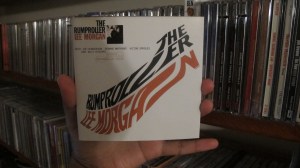
By 1965, Lee Morgan had already released some of his most incredible work (The Sidewinder, Search for the New Land, Tom Cat), and ’65 was a particularly fruitful year for the prodigious trumpeter. The Gigolo, Cornbread, and Infinity were all recorded this year (although Infinity would not be released until 1980). But out of all of the albums released this particular year, it is The Rumproller that captures my heart most. Morgan is joined by tenor saxophonist Joe Henderson, pianist Ronnie Matthews, bassist Victor Sproles, and Billy Higgins on drums. The tunes are off the beaten path, and I love that about this record. I also love the array of composers on this album. From Andrew Hill’s very 60s pop-feel title track to Wayne Shorter’s gorgeous uptempo waltz “Edda”, to Morgan’s own “Desert Moonlight”, the album celebrates the music of Lee’s contemporaries and the songs are executed superbly. Henderson’s solo intro from his brawny tenor on “Edda” is soul-gripping. On this same song, you hear some of pianist Ronnie Matthews’ prettiest playing, as he counters Henderson’s heaviness with a butterfly-delicate, whimsical solo. His solo on “The Lady” is equally enchanting. The bass-drum hookup between Sproles and Higgins is so perfectly fluid and solid at the same time,with Sproles balancing “the bottom” and melodic lines to perfection, and Billy Higgins…do we really need to even discuss? This album is ultra moody, and has a brilliant pop element to it. This album is danceable, catchy, and “hep” without trying per se to appeal to that audience. It is the perfect example of jazz assimilating all that is surrounding it (modernism, ahem) and expressing it with acute individualism. One of the greatest post-bop outings in the world, if you ask me.
Thanks for your patience. Sorry about the Album for the Week hiatus! It’s been a busy summer! But this album is worth the wait. Closed my eyes, and ran my fingers across the library and came up with THIS gem!
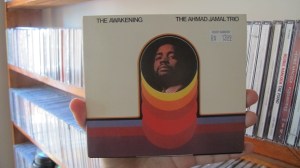
Ahmad Jamal’s 1970 classic The Awakening is a preeminent outing, which embodies and fuses a range of pianistic heritage and innovation, making this album a timeless reference for every modern pianist to follow. This album explored the trio in ways that had not been done before. Jamal’s warm, gospel feel and lush re-harmonizations on “I Love Music” are so ahead of their time; a mass appeal to hip-hop producers and DJs. The mix alone is raw, edgy and moody. Sampled by the incomparable Pete Rock for rapper Nas’ debut album Illmatic, “The World Is Yours” was one of the most stand-out tracks on this seminal hip-hop album. (I spent many days with my investigative ears on, determined to figure out exactly how Mr. Rock chopped this song. And I did!) Nas’ brilliant and jazz-inspired phrasing over Jamal’s haunting progressions and Pete Rock’s gritty drum programming and scratching created a modern day masterpiece.
Jamal Plays Jamal, released in 1974, is another hip-hop treasure, with songs like “Swahililand” and “Pastures” being sampled by J Dilla and producer Ski, who created an impeccable New York inspired backdrop to Jay-Z’s “Feelin’ It” from the classic Reasonable Doubt album. But unlike the funk/groove oriented Jamal Plays Jamal, with all original compositions, the use of electric keyboards, and intricate string arrangements, The Awakening is a musical love letter to integral artists like Herbie Hancock, Jobim, and Oliver Nelson, whose compositions Jamal interprets most bewitchingly. Songs like “Dolphin Dance”, “Wave”, and “Stolen Moments” are transformed without compromise, or even intricate rearrangements; a testament to the elastic possibilities of the acoustic trio, and Jamal’s obvious openness to all that was modern and happening around him in the present. Like Herbie Hancock, and Hank Jones, Jamal always sounds ahead of his time because he always embraced what was both current and on the horizon. As stripped down as this album is in theory, at points it sounds almost symphonic, thanks in big part to the deft and melodic bassist Jamil Nasser, and the agile Frank Gant on drums.
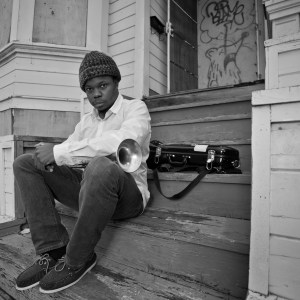
Ambrose Akinmusire was born in 1982, a symbolic and transformational year in jazz. Wynton Marsalis had just released his self-titled debut album on Columbia Records, while he was still a part of Art Blakey’s Jazz Messengers. This album would prove symbolic, as it represented what was to come; a desperately needed re-emergence and preponderance of acoustic and straight-ahead jazz. This revitalization during the 1980s produced several pivotal artists who bridged the cultural gap, and served as the catalysts who incited the current generation of jazz musicians. Now, almost exactly thirty years later, Oakland native Akinmusire is at the apex of a similar potential revival.
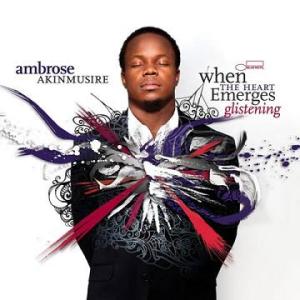
Winner of the 2007 Thelonious Monk International Jazz Trumpet Competition, Akinmusire has been on the jazz radar as a paramount player for a few years now. Fast forward to the present… Downbeat Magazine named Akinmusire both Rising Star Jazz Artist of the Year and Rising Star Trumpet in their 2011 Critics Poll, in addition to giving his Blue Note debut, When the Heart Emerges Glistening, a glowing four-star review. The Los Angeles Times named Akinmusire one of their 2011 “Faces to Watch” and The New York Times has also hailed the virtuoso, placing him on everyone’s it-list. Now this time, the critics are unanimously on the money. Akinmusire and his quintet have emerged as a force with which to be reckoned; raising the stakes when it comes to individuality, intent, vision and modernism.
Unlike the respective eras of his predecessors; when Blanchard, Payton and Hargrove exploded onto the scene, Akinmusire has arrived at a time when there is so much disparity, discrepancy and downright indifference about jazz. Follow any social media threads about the genre and it’s instantly apparent that there are a lot of disparaging sentiments toward the general state of jazz and every imaginable (and sometimes unimaginable) sub-context. And whether you agree or take issue with what’s on the table, the underlying truth is that people are frustrated, making Akinmusire’s advent that much more substantial.
Much of the jazz audience proclaims an air of stagnation, lack of inventiveness and compromise of the art form. Akinmusire agrees. These subjects are compounded by matters of race, culture and the overall state of the music industry, making the waters for diagnosis conveniently murky for most, but not all. “I don’t think many people are doing it,” Akinmusire blatantly states. “I think a lot of people want the approval of critics, so they end up dumbing their shit down.”
For Akinmusire, the intent is first and needs to be established long before getting on the band stand. His quintet is made up of close friends and long-time collaborators: tenor saxophonist Walter Smith III, pianist Gerald Clayton, bassist Harish Raghavan and fellow Oakland native, drummer Justin Brown. Growing up in Oakland, Akinmusire’s philosophies about loyalty and community are entrenched in his artistry. “I try to be as honest as possible with myself. I try not to hang out with people who I don’t like. I try to trust my instinct. In five seconds of being around somebody, I know whether or not I can really vibe with them. So, I think that’s related to the music too. I try to surround myself with musicians who I feel challenged by as opposed to musicians who are just killing. I try to surround myself with musicians who I don’t know how they’re going to sound six months from now, or five years from now, or ten years. If I hear somebody playing, and I can say OK, twenty years from now, I know exactly how they’re going to sound; I don’t really fuck with them. I think all of that is related.”
From the opening track of When the Heart Emerges Glistening, there is a relentless fire which rages from the band, causing a neck-snapping reaction from the listener. It is reminiscent, but only in the sense that you are transported to a time when jazz as a whole was courageous and bold. The telepathic nature of the band’s interaction and the ensuing execution is mind-blowing. “I think that everybody in the band is extremely hard on themselves; they’re never satisfied,” says Akinmusire, as he tries to put their chemistry into words. “Like, if we had the best performance ever, and you come backstage, we’re all gonna be sitting there with our heads down like ‘Man, that sucked I need to practice.’ Everybody is constantly shedding and trying to move forward. And there are no egos in the band at all…at all. Nobody ever gets mad at the other person for messing up or changing parts or anything like that. So, I think there’s that and also we’ve known each other for so long. I grew up with Justin. I met him when he was in middle school. I’ve known Walter since 2001. Harish, I’ve known for maybe 6 years. Gerald, I met when he was still in high school, and Sam Harris (the new pianist in the group), I went to Manhattan School of Music with him. And I just grew up like that. I grew up in North Oakland and there’s this saying that you stick with your crew from the beginning to the end, even if there have been some weird, funny development issues, it will eventually…you know…it’s like family. No matter what, you’re supposed to have their back. I think that everybody who I have in the band has the same sort of outlook and I think you hear that in the music.
To co-produce the album, Akinmusire called upon his mentor, fellow Manhattan School alum, and Blue Note label mate, Jason Moran, to help translate the magic which is so essential to the band, to record format. “I didn’t have to explain anything to him; that’s why I picked him, because he’s all about hitting and being real honest…he embodies that in his art,” explains Akinmusire, who wanted the album to feel as raw and in-the-moment as possible. “It was just a constant reminder to come out of the booth and see Jason sitting there. It was like, I gotta be about the music. I can’t be like I’m on Blue Note and stressing about this shit. He helped to relax me and helped me to remember my purpose as an artist.”
This element of intangible guidance and rearing from Moran is quite familiar to Akinmusire. Having never had a trumpet lesson until he reached college, he honed his skills as a trumpeter in a very unconventional fashion, especially for these days of extreme institutionalization of the music. Akinmusire recalls, “I went to a jazz camp… I don’t know how we heard about it. Maybe there was a flier at the school, and I went. And all these old-school musicians were teaching there and they sort of became my mentors. Bassist Herbie Lewis… I met him, and then Donald Bailey, who played with Jimmy Smith and all these people. They just sort of started mentoring me. They would pick me up from the house, and take me record shopping or bring me on their gigs, and I would just sit there. Some taught at college. They would pick me up and take me to their college classes. They really just started mentoring me. I never really had a teacher. I didn’t sit there and play rudimental studies, and stuff, it was really ‘groid’, like ‘Here’s a trumpet and I’m going to teach you about the history…about the music.’ Just through stories, just old-school style. Like, most of these guys, they were old-school. They didn’t know shit about classical studies, they just picked their shit up and played…smoked weed; some of them were ex-Black Panthers, like real ‘groid’, you know? I mean, I would get with Roy [Hargrove] and Nick [Payton] when they came into town like, ‘Is my embouchure OK? Yeah? OK, cool.’ But I never had a lesson.”
This crucial piece of Akinmusire’s story is no doubt the principal component of the development of his prodigious voice. It also manifested as an expected point of contention, when he got to the collegiate juncture of study. “By the time I came to high school, I already knew Billy Higgins, I knew Joe Henderson. So you got these cats [at Manhattan School] telling me blah-blah-blah, and I’m thinking, ‘That’s not what he was just telling me.’ So there was a lot of arguing.”
The institutionalized setting in which jazz has found itself engulfed, is one of the most debated issues, with most viewing the predicament as a double-edged sword. The argument being, that while the formal setting of jazz in schools gives exposure to young people who may not have otherwise discovered the art form, in a time where venues for jazz are closing at record speed, and pop-culture is eerily dominating, the flip side is an ill-appropriate, overly-Westernized approach to jazz, stripping it of its most essential elements; otherwise known as its “Blackness”.
We’re all being honest here, right?
Photo by Clay Patrick McBride
The overall discontentment with jazz is comfortably enigmatic, until you dig deeper and realize this “thing” everyone is missing, is the part which is most ancestral and least able to be captured in a school setting severely devoid of Black people. Consequently there are two broad views: One which has many Black people arguing that they are being written out of the jazz “present” and conversely, the other has many people strongly, but naively believing there is no room or relevance for race in a discussion regarding jazz. Akinmusire’s take is based on neither premise, per se and as in his music, Akinmusire’s honesty is no bullshit.
“I don’t think you can take someone’s culture,” he explains. “Once something becomes tangible, then you can take it away and that’s because we don’t have it here in our hearts. So maybe that’s why I don’t understand [the first viewpoint]. It’s like, I’m Black; you can’t take that away from me. I live jazz; you can’t take that away from me. If we have a whole community who understands that it’s here [points to his heart], you can’t take that away from us. That’s the way it was with the be-boppers, before jazz education came and made it this tangible thing and a lot of people started believing it.”
The moment he said that to me, my vision cleared. Honestly, it never really dawned on me that the onus might be on the Black jazz community, or lack thereof. Akinmusire was born to a Mississippi-raised mother, and a Nigerian father; neither of whom were musical or very familiar with jazz. The first musician on either side of his family, who was discovered by jazz, and not the other way around, Akinmusire truly speaks from a rare and untainted perspective.
“To say ‘this is ours’…that’s a known thing, we don’t need to necessarily say that, and saying it is not necessarily going to make people not want to take it away if that’s what they’re trying to do. It’s just going to exclude people like, ‘Oh I can’t do that.’ And those people might have valid things to say and contribute to the music. I think if you just live that…like, to me, Mark Turner is like that. He’ll never say a word. Or, like Marcus Gilmore. These cats don’t talk, but if you get on the band stand with them, you know you have to deal, and that’s some black shit. Like yeah, this is our music. But if you’re not stepping up to the plate and playing like that, then yeah you have to talk ‘They’re taking it away.’ You think Trane had to say that? He didn’t have to say nothing. You think Lee Konitz was going to get up there with the John Coltrane Quartet? You don’t have to say nothing.”
BOOM.
It was a bucket of ice water thrown to the face, but I’m wide awake and that’s a good thing. The truth is, Black art forms have been habitually and historically compromised, but there comes a time when the discussion has to lead to a diagnosis and the diagnosis has to lead to a treatment and then, the treatment has to begin and Akinmusire, through his words, but ultimately through his music, has given jazz a serious bedside visit.
“George Wein hit me up last year and was like, ‘I want you to play at Zankel Hall,’” Akinmusire tells me as we stroll down a Williamsburg street on a sunny Brooklyn afternoon. “He wanted the quintet. I said, ‘How about I do a big band…an all-black big band?’ He was like, ‘Yeah it’s cool! Is that because you want to reclaim the music?’ I said, ‘No…it’s just that I want the community; I miss the community.’ When I was coming up it was really inspiring. I used to go out and see Roy Hargrove, Eric Lewis, Marcus and EJ Strickland, Bilal…that shit was so inspiring for me to come to New York and see all these great Black musicians just really trying to push themselves and now that doesn’t really happen and I think that the music is suffering because of the lack of community of Blacks. If we don’t have a community, we can’t really complain, so I think that’s what needs to happen first.”
Photo by Clay Patrick McBride
That sense of community also influences Akinmusire’s writing, as he composes specifically with his tightly knit quintet in mind. He says of the interwoven nature of his band, “It’s a blessing and a curse because I can’t write for anybody else, because I’ve been playing with Walter for so long. Justin is the only drummer I’ve been playing with consistently for the last thirteen years. I mean there was Zach Harmon, when I was working at the Monk Institute. That was two years. But really, with all of my compositions, I’m hearing Justin. So when I play with other people, when they try to interpret their way it just doesn’t feel right… same thing with Walter. He has such a specific sound and tone and way of phrasing and you know, we phrase together so when I play with somebody else and they’re not really getting it, I find myself feeling uneasy and getting upset… same thing with Harish.” Akinmusire penned twelve of the thirteen songs on When the Heart Emerges Glistening, his pieces as distinguished and refreshing as his playing. The album feels cinematic, in part with a theme-like pensiveness throughout.There is nothing surface about this album, but it never compromises its accessibility.It is one of the most modern statements to come along in a while, with the culmination of history that is obviously Akinmusire’s foundation clearly not acting as a hindrance to his singular voice.
“I feel like people who consider themselves traditionalists are ignorant, and that comes from a lack of understanding that whatever it is you’re analyzing is related to the history of that time,” says Akinmusire about the strongholds which many so-called jazz purists have cemented in their expectations. “So bebop was relating to what was happening at that time and it was modern at that time. So I just try to play the music that’s of the now right now and that’s related to me and I just try to be honest with who I am. Today I feel this way and tomorrow I may feel another way and I think it takes courage to say what I thought yesterday was wrong and I think a lot of people are scared to do that. That’s one thing my girlfriend has taught me. She’s very honest and she will die for honesty, and that’s something that has affected my music… same thing with my mom.”
What is most treasurable about Akinmusire is that like the title of this record, which represents a stripping down of all that is apparent to expose what is really important in life, he himself, stripped of the critical acclaim and accolades is, at his core, the epitome of an artist. The word honesty or a variation of such is used in this piece alone fourteen times, not because of redundancy on my part, or naïveté on Akinmusire’s. But because it’s the engine of innovation; the thing which will help elevate jazz to its purpose once more.♦
Hearing Kendrick Scott is an experience. There’s no other way to explain the entrancing language of one of this generation’s most gifted drummers. His masterful drumming, without fail, somehow propels his audience to a spiritual journey; a bestowal that is far beyond the music itself. It’s been five years since Scott released his debut album, The Source, for World Culture Music, his independent music label. The “hiatus” has been with good reason. Scott has been touring consistently and extensively with mentor and employer of eight years, Terence Blanchard. He has also been featured, playing on several film scores (A Tale of God’s Will, Just Wright and others) and was part of the 50th Anniversary Monterey Jazz Festival All-Star Band, which was led in-part by the late, great James Moody. Scott also released Reverence for the Criss Cross label; an outstanding quintet session of standards from Wayne Shorter, Ornette Coleman, Kenny Dorham, and Herbie Hancock; the latter whom Scott has also spent substantial time touring with.
Conviction, Scott’s sophomore album for World Culture Music will drop early next year, and features Scott’s splendid “Oracle” band which includes pianist Taylor Eigsti, guitarist Mike Moreno, saxophonist John Ellis, and bassist Joe Sanders. Conviction represents, as Scott describes, “The shedding of me wanting to be like all of my idols.” This is an interesting testament given that Scott is a drummer with one of the most original voices in modern jazz. However, he also attributes the title to a shift in the way he presents music as a composer, and also in the way he delivers those compositions, now displaying a more prominent drum presence to balance out his strong affinity for melody; a love birthed from his gospel roots.
“See, now I’m trying to reconcile two different views,” Scott explains. “My lyrical view of what I think music should be like and feel like, and then being a drummer. If you notice, on The Source, most of the tunes are very lyrical, but there’s not a lot of aggressive drum writing, so I actually relished in that; I love that. But now as I’m growing a little bit, I want to write some more aggressive stuff. I’m always the sensitive guy sometimes, and I still want to be that, but I also want to play some drums, you know?”
There’s no question that Scott is a powerhouse drummer, playing with a compulsion and dynamism that few can match. But he also possesses an unparalleled compassion, sagacity and clarity in his playing; there are few drummers who can rouse so much emotion and create such a range and mélange of colors. These dynamics glisten in his writing. Scott’s compositions, like his drumming, have the ability to transport listeners in a way that is far beyond descriptions like mood or vibe; it is intensely ancestral.
For “The Source”, Scott used a method of composition that is becoming more of an integral part of his writing today. Taught to him by Blanchard, it’s a method that expanded on his basic ideas for the tune. “There’s a process that [pianist, educator and Pulitzer Prize nominee] Roger Dickerson taught Terence,” says Scott. “It’s called If I Could, I Would Tell You. And it’s mainly about theme and variation. So, you take one theme and you turn it on its head, and then you write it backwards and then you write all of these variations out, and then pretty much, your original idea informs your whole writing process. So instead of “stream of consciousness”; instead of me singing a melody and singing it all the way to the end, I’m taking my one little idea and making a whole song out of it. So, if you listen to “The Source”, I took [sings melody] and I transferred that to the bass, I transferred it in the melody, and then if you listen to the end of it, I elongated it. Instead of a beat a piece, it’s bar a piece and then I transferred the bass notes. So it’s just one of those things where I’m just learning how to manipulate ideas more than just “stream of consciousness” now. It’s interesting to watch Terence teach it because it has this whole different…it gets so in-depth. I mean, it’s infinite.”
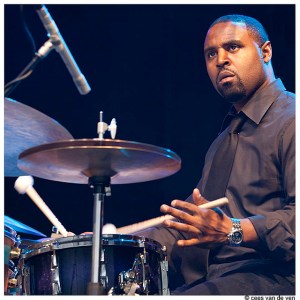
Copyright All rights reserved by cees van de ven
Scott has also adopted this same method to inform his developed philosophy about his purpose on the bandstand. He explains, “Usually when I play the drums, all of the elements of the ideas from the foundation of the tune itself, is one layer. The people I’m playing with are another layer, and then my imagination is the top layer. But the bottom layer is my references, right? My references of knowing like, what Ben Riley has played, what Al Foster, or Shadow Wilson has played; Max and all of those guys. So you have your references, then you have the tune, people, and then on top of that, I think you have your imagination. So you’re hearing all of those things, and the hierarchy is those guys, and what you’re playing is the next level and then relating to the people is paramount, and then your ideas are paramount but they’re not as paramount as the basis…for me. So what I try to do is use that If I Could, I Would TellYou if we’re playing something like ‘All The Things You Are.’ I’m going to use things from the tune because we’re playing the form of the tune, or lets’ say Stablemates because I always use that as an exercise. I say, OK take “dah-dah-dah”; just three notes, and make it go all the way through the tune. And then using the ideas of the people that you play with to inform you in creating those ideas, and as you can see it starts creating a web a huge web. And you’re like ‘Oh wow, all of these things are springing from three notes.’ So that’s just the way I’m starting to compose now; just little small elements that I can manipulate, instead of the really big ones… the through-composed things.”
Scott credits his several years in Blanchard’s band to much of his growth as a drummer, and particularly to his development as a composer. Blanchard has among other things, augmented the realm of possibilities for jazz musicians, becoming one of the film industry’s most revered scorers. For Scott, Blanchard’s early advice to “learn to do what you do,” helped him to develop such striking individuality. “It took me so long to figure out that that’s what I need to do,” says Scott. “Because even if someone says that…you know. So that release of surrendering to that…that was like a huge light bulb moment. So, I always attribute that to Terence, because I don’t think it would have happened in other situations. Well…I think it would have, but I don’t think I would have had the opportunity for things to just bud the way they have over eight years of playing with him, and him being encouraging about it. Because I think people can encourage, but then you’ll forget.”
Blanchard is not Scott’s first or only point of reference when it comes to composition. His mother, an accomplished pianist, was also very impressionable on Scott. “One of my mother’s good friends was song writer Michael McKay, so I was always in an environment where people were being creative and writing not necessarily just jazz, but gospel music,” says Scott. “I only came to start composing in jazz when I turned fourteen or so. All before then, it was just pretty much gospel music or classical music that I was around, you know? And R&B and stuff at home. So when I finally got to high school, I just started opening up and just kind of writing down ideas here and there but not really knowing what the hell I was doing.”
Scott is a product of the burgeoning group of jazz musicians that came out of Houston’s renowned High School for the Performing and Visual Arts; a cultural hub that exported the likes of Jason Moran, Mike Moreno, Eric Harland, and Chris Dave to the New York City jazz scene. He went on to the prestigious Berklee College of Music in Boston, and before graduation he had already caught the attention of several jazz greats, gigging with Pat Metheny and Kenny Garrett. But it was soon after graduating that Blanchard would grab up the immensely talented and budding drummer.
Years and mammoth transitions and experiences later, Scott has made an indubitable mark as a truly inspired and brilliant artist. With Conviction, the suitably titled project will create another benchmark for possibilities. “I’m pretty proud of it,” says Scott. “It’s a departure from The Source. A little more aggressive and little more drum oriented, which is different for me because I always said I want the drums to be powerful, yet transparent, and I think any great musician… his musicianship is always that way. It’s always upfront, but it always lets the other things around it shine through. So the transparency is always something I’m looking for in my drumming.”
That transparency spills over to facets beyond Scott’s drumming. There is accordance on a human level that Scott embodies off of the band stand. And when it speaks through his art (both writing and performing) it can’t help but inspire. For Scott, there is never a sense of being settled, but constant searching. “I heard that Prince gets up every day and writes a song; same thing with Wayne [Shorter],” says Scott. “I wanna become married to the process. There’s this book Stravinsky wrote called The Poetics of Music and he talks about there being two kinds of writers. There’s one that writes from inspiration and one from necessity. So mostly I’ve been an inspirational writer, I’ll say ‘Oh this picture is beautiful, let me write something.’ But he said he was more the type of guy who gets up and says I’m going to write now. I’m going to make it happen. So I’m just learning every day from that and going between those two types of writing; the necessity and the inspirational, and just trying to bring that to light through my compositions.”♦






 ALTERNATE TAKES